Mobile phone
A small meeting place for very different materials.
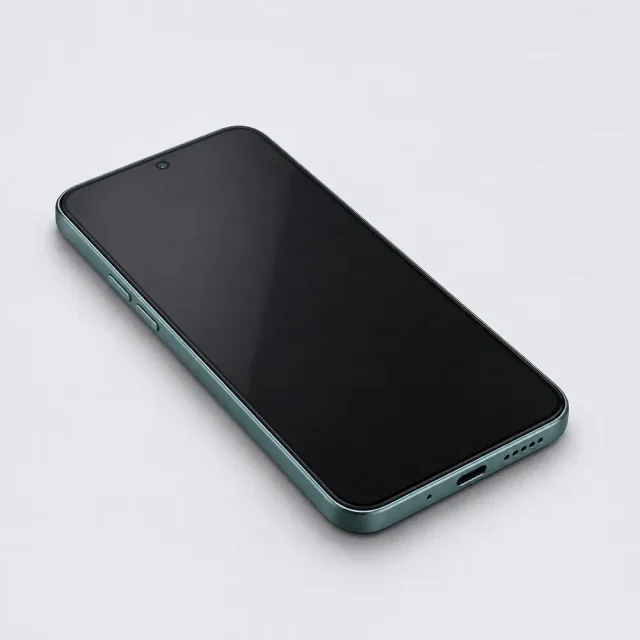
A phone works because its materials disagree in useful ways. Some must carry electricity; others must stop it. Its front must admit light, while its case must survive handling. Inside, exceptionally pure semiconductors sit beside deliberately mixed alloys, ceramics and polymers. This representative smartphone follows five functional assemblies. It does not describe every element present, and it is not the bill of materials of a particular manufacturer.
Start with a part, then follow a material. No specialist knowledge needed.
Inside the object
Original conceptual illustration. Numbers open the component index; their positions are illustrative, not a disassembly guide. Equivalent text follows beside the diagram.
1Cover and display
Chemically strengthened aluminosilicate cover glass protects the display while transmitting light. It is distinct from the layers producing the image. Some touch displays use indium–tin oxide as a transparent conductor: the tin is chemically combined in a coating, not a sheet of tin metal.
2Logic board
Silicon chips control signals; copper tracks connect components across an insulating board commonly made with glass fibre and cured epoxy. Conductive paths must remain separated. The board is therefore a carefully arranged composite assembly rather than a homogeneous slab of one electrically useful material.
3Rechargeable cell
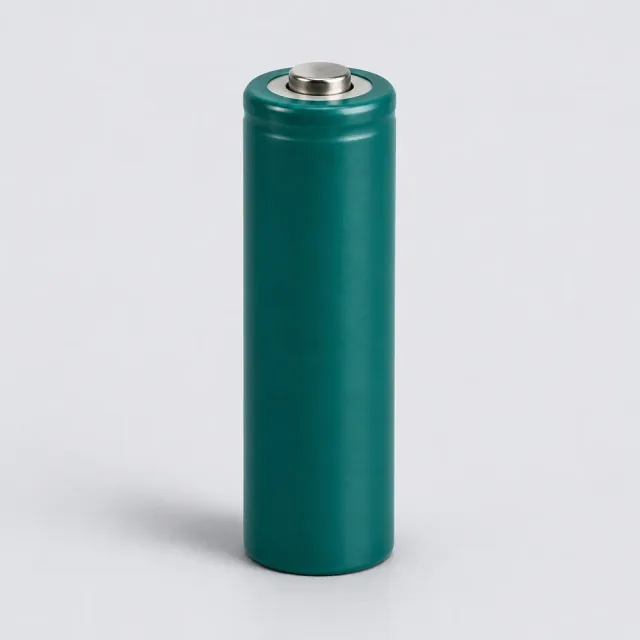
A lithium-ion cell stores energy through reversible reactions involving lithium ions. Graphite commonly forms the negative electrode. Cobalt occurs in some positive-electrode compounds, but not all lithium-ion chemistries. Separators, electrolyte, foils and protective electronics are also essential; this view is not a disassembly guide.
4Case and frame
An aluminium alloy frame can supply stiffness and spread heat. Polymer housings or internal antenna regions allow radio signals to pass where a continuous metal enclosure would be troublesome. Glass-backed, steel-framed and titanium-framed designs exist, so the visible finish alone cannot identify the complete structure.
5Speakers and connections
Small loudspeakers can contain neodymium-bearing permanent magnets that move a coil and diaphragm. Copper carries current through coils and cables. Thin gold plating may protect selected electrical contacts against corrosion; this is a surface treatment, not evidence that connectors are solid gold.
Why these materials?
The useful question is not how many elements a phone contains, but which jobs cannot be done by the same material. A conducting enclosure would interfere with antennas if its geometry were ignored. A strong glass cover still needs support because scratches and impact can start cracks. A flexible circuit connection can accommodate assembly where a rigid board cannot. Adhesives and compact packaging help make the device thin, yet complicate repair and separation. Design choices therefore connect durability, radio performance, temperature control and access to replaceable parts.
One object, many versions.
Basic phones, foldable devices and rugged phones use different displays, batteries and housings. A foldable screen needs a flexible stack and may use very thin glass or polymer cover layers. Cell chemistry also varies by model. Mineral country rankings describe world production, not the origin of the particular phone in someone’s hand.
What happens after use?
Keeping a functioning phone in service, repairing a replaceable part and passing on a usable device can retain more of its assembled value than recovering its metals. Before transfer, follow the manufacturer’s data-removal procedure. Use an electronics collection route for a failed device. Embedded lithium-ion batteries make ordinary waste and mixed recycling unsuitable; do not puncture or dismantle a damaged cell.
Put the choices side by side.
Familiar things, connected.

Follow the evidence
Original explanations informed by the sources below. Technical and industry sources support material behaviour; industry environmental marketing is not treated as a universal comparison. Browse the source register.
- A World of Minerals in Your Mobile Device ↗U.S. Geological Survey · 2016-09 · Checked 2026-11-13
- Used Lithium-Ion Batteries ↗U.S. Environmental Protection Agency · Undated · Checked 2026-11-13
- Types of Technical Glasses ↗SCHOTT · Undated · Checked 2026-11-13
- Main properties of SCHOTT glass ↗SCHOTT · 2026-07 · Checked 2026-11-13
- Tin — element information, properties and uses ↗Royal Society of Chemistry · Undated · Checked 2026-11-13
- Mineral Commodity Summaries 2026 — Tin ↗U.S. Geological Survey, National Minerals Information Center · 2026-05-27 (version 1.3) · Checked 2026-11-13
- Silicon — element information, properties and uses ↗Royal Society of Chemistry · Undated · Checked 2026-11-13
- Mineral Commodity Summaries 2026 — Silicon ↗U.S. Geological Survey, National Minerals Information Center · 2026-05-27 (version 1.3) · Checked 2026-11-13
- Solar Photovoltaic Manufacturing Basics ↗U.S. Department of Energy · Undated · Checked 2026-11-13
- How Do I Recycle Common Recyclables ↗U.S. Environmental Protection Agency · Undated · Checked 2026-11-13
- Mineral Commodity Summaries 2026 — Copper ↗U.S. Geological Survey, National Minerals Information Center · 2026-05-27 (version 1.3) · Checked 2026-11-13
- Copper Life Cycle ↗International Copper Association · Undated · Checked 2026-11-13
- Composite materials: Materials ↗Composites UK · Undated · Checked 2026-11-13
- Guidelines and Recommended Practices for Fiber-Reinforced-Polymer Architectural Products ↗American Composites Manufacturers Association · 2016 · Checked 2026-11-13
- End of Life and Recycling ↗Composites UK · Undated · Checked 2026-11-13
- Epoxies EP ↗British Plastics Federation · Undated · Checked 2026-11-13
- Lithium — element information, properties and uses ↗Royal Society of Chemistry · Undated · Checked 2026-11-13
- Mineral Commodity Summaries 2026 — Lithium ↗U.S. Geological Survey, National Minerals Information Center · 2026-05-27 (version 1.3) · Checked 2026-11-13
- Technology Strategy Assessment — Lithium-ion ↗U.S. Department of Energy · 2023-07 · Checked 2026-11-13
- Mineral Commodity Summaries 2026 — Graphite ↗U.S. Geological Survey, National Minerals Information Center · 2026-05-27 (version 1.3) · Checked 2026-11-13
- Cobalt — element information, properties and uses ↗Royal Society of Chemistry · Undated · Checked 2026-11-13
- Mineral Commodity Summaries 2026 — Cobalt ↗U.S. Geological Survey, National Minerals Information Center · 2026-05-27 (version 1.3) · Checked 2026-11-13
- Aluminum Production and Processing ↗The Aluminum Association · Undated · Checked 2026-11-13
- Mineral Commodity Summaries 2026 — Aluminum ↗U.S. Geological Survey, National Minerals Information Center · 2026-05-27 (version 1.3) · Checked 2026-11-13
- Polycarbonate (PC) ↗British Plastics Federation · Undated · Checked 2026-11-13
- Plastics Processes ↗British Plastics Federation · Undated · Checked 2026-11-13
- Neodymium — element information, properties and uses ↗Royal Society of Chemistry · Undated · Checked 2026-11-13
- Mineral Commodity Summaries 2026 — Rare Earths ↗U.S. Geological Survey, National Minerals Information Center · 2026-05-27 (version 1.3) · Checked 2026-11-13
- Gold — element information, properties and uses ↗Royal Society of Chemistry · Undated · Checked 2026-11-13
- Mineral Commodity Summaries 2026 — Gold ↗U.S. Geological Survey, National Minerals Information Center · 2026-05-27 (version 1.3) · Checked 2026-11-13