Lithium-ion battery
Ions travel inside; electrons take the useful outside route.
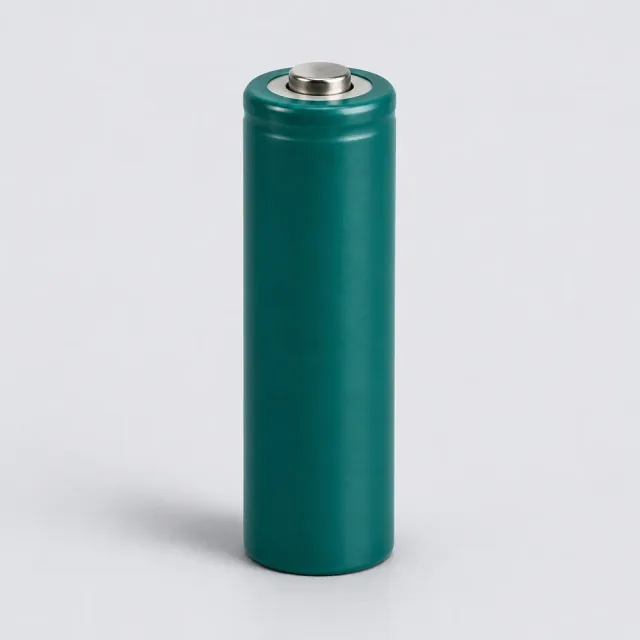
A lithium-ion battery stores chemical energy that can be converted into electrical work. Lithium ions move between electrode materials through an electrolyte, while electrons flow through the external circuit. Several thin layers must remain precisely separated. This representative cell explains the functions of those layers without showing a procedure for opening them. Lithium-ion is a family of chemistries, not a promise that every cell contains cobalt or metallic lithium.
Start with a part, then follow a material. No specialist knowledge needed.
Inside the object
Original conceptual illustration. Numbers open the component index; their positions are illustrative, not a disassembly guide. Equivalent text follows beside the diagram.
1Negative electrode
Graphite commonly hosts lithium in its layered structure during charging. A copper current collector provides a conductive route to the external connection. The electrode also contains binders and conductive additives. Its function depends on controlled interfaces and porosity, not simply the presence of a lump of carbon.
2Positive electrode
One common family uses lithium-containing transition-metal oxides, which may contain nickel and cobalt, supported on an aluminium current collector. These elements are chemically combined in active compounds. Lithium iron phosphate is an important alternative that contains neither nickel nor cobalt in its positive-electrode compound.
3Separator
A thin porous separator prevents the two electrodes from directly touching while allowing ions to pass through electrolyte-filled pores. Polypropylene and polyethylene are established separator polymers, sometimes in multilayer or coated structures. This layer is mechanically delicate but essential: electrical insulation and ionic transport must coexist.
4Electrolyte and enclosure
An electrolyte containing a lithium salt carries ions within the cell; its solvents and salt are not represented as complete entries here. A steel can or aluminium-containing pouch provides containment in different formats. Seals, safety features and protective electronics belong to the designed system, not optional accessories.
Why these materials?
The separator reveals a useful distinction between two kinds of electrical movement. The electrolyte carries ions, while metal conductors carry electrons. A cell produces useful work when the electron path runs through the connected device instead of bypassing it inside the cell. Thin layers increase the active area in a compact package, but also demand controlled manufacturing. Damage, heat or incompatible charging can disrupt that arrangement. Capacity and lifespan depend on chemistry, construction and operating conditions, so a single material cannot explain the whole battery’s behaviour.
One object, many versions.
Cylindrical, prismatic and pouch cells package the layers differently. Lithium iron phosphate, nickel-rich oxides and lithium cobalt oxide have different balances of energy density, lifetime, cost and stability. Rechargeable nickel-metal hydride and lead-acid batteries are different technologies altogether. The term lithium-polymer commonly describes a lithium-ion construction; it does not by itself mean a fundamentally cobalt-free or solid-state chemistry.
What happens after use?
Follow manufacturer and local collection guidance for a worn or damaged battery. Dedicated battery or electronics recyclers can recover selected materials using controlled industrial processes, with recovery varying by chemistry and facility. Never put lithium-ion cells in ordinary household rubbish or mixed recycling where crushing can cause fires. Do not open, puncture, heat or attempt to rebuild a cell as a materials experiment.
Familiar things, connected.

Follow the evidence
Original explanations informed by the sources below. Technical and industry sources support material behaviour; industry environmental marketing is not treated as a universal comparison. Read our editorial method.
- Lithium-Ion Battery Recycling: how cells work and how chemistries differ ↗U.S. Environmental Protection Agency · Undated · Checked 2026-11-13
- Used Lithium-Ion Batteries ↗U.S. Environmental Protection Agency · Undated · Checked 2026-11-13
- Mineral Commodity Summaries 2026 — Graphite ↗U.S. Geological Survey, National Minerals Information Center · 2026-05-27 (version 1.3) · Checked 2026-11-13
- Technology Strategy Assessment — Lithium-ion ↗U.S. Department of Energy · 2023-07 · Checked 2026-11-13
- How Do I Recycle Common Recyclables ↗U.S. Environmental Protection Agency · Undated · Checked 2026-11-13
- Mineral Commodity Summaries 2026 — Copper ↗U.S. Geological Survey, National Minerals Information Center · 2026-05-27 (version 1.3) · Checked 2026-11-13
- Copper Life Cycle ↗International Copper Association · Undated · Checked 2026-11-13
- Lithium — element information, properties and uses ↗Royal Society of Chemistry · Undated · Checked 2026-11-13
- Mineral Commodity Summaries 2026 — Lithium ↗U.S. Geological Survey, National Minerals Information Center · 2026-05-27 (version 1.3) · Checked 2026-11-13
- Cobalt — element information, properties and uses ↗Royal Society of Chemistry · Undated · Checked 2026-11-13
- Mineral Commodity Summaries 2026 — Cobalt ↗U.S. Geological Survey, National Minerals Information Center · 2026-05-27 (version 1.3) · Checked 2026-11-13
- Nickel — element information, properties and uses ↗Royal Society of Chemistry · Undated · Checked 2026-11-13
- Mineral Commodity Summaries 2026 — Nickel ↗U.S. Geological Survey, National Minerals Information Center · 2026-05-27 (version 1.3) · Checked 2026-11-13
- Aluminum Production and Processing ↗The Aluminum Association · Undated · Checked 2026-11-13
- Mineral Commodity Summaries 2026 — Aluminum ↗U.S. Geological Survey, National Minerals Information Center · 2026-05-27 (version 1.3) · Checked 2026-11-13
- Polypropylene (PP) ↗British Plastics Federation · Undated · Checked 2026-11-13
- Plastics Processes ↗British Plastics Federation · Undated · Checked 2026-11-13
- What is steel? ↗World Steel Association · Undated · Checked 2026-11-13
- Raw materials ↗World Steel Association · Undated · Checked 2026-11-13