Brass
Brass is a family of copper alloys in which zinc is the principal alloying addition. Its familiar yellow colour is only one feature: changing composition and manufacturing history changes how a brass bends, machines, wears and carries current. A key blank, a door handle and a plumbing fitting therefore need not use the same grade. Brass can provide a useful combination of shapeability, surface finish and strength, while a coating may conceal the metal entirely.
Useful properties
Why it earns its placeMachining and forming ↗
Different grades suit cutting, forging, drawing or casting; a good machining alloy is not automatically the best deep-drawing alloy.
Strength from alloying ↗
Zinc and other additions, together with cold working, change the resistance to permanent deformation.
Conditional durability ↗
Brass withstands many everyday environments, but water chemistry, stress and alloy composition can create specific corrosion problems.
From input to useful material.
A simplified industrial pathway. Select a stage to learn what changes. Recycled feedstock and other process variants can enter at different stages.
Origins & processing
Production starts with copper and zinc from primary refining, recovered scrap, or a controlled combination. A foundry or mill checks the incoming chemistry because unwanted elements can change performance. The metals are melted and adjusted to the specified composition, then cast into a component or into stock for further working. Rolling, extrusion, forging and machining create different product forms. Annealing between deformation steps can restore workability. A decorative finish, lacquer or plated layer may be applied after the functional shape has been made.
Where it turns up
Brass appears in key blanks, lock mechanisms, door furniture, electrical connector parts and many fluid fittings. Its ability to produce intricate, repeatable features helps explain these uses. In a plated handle, the visible silver-coloured surface can be a separate coating over brass. Product identification still matters: similar-looking parts may be zinc alloy, steel or aluminium.
Useful, with limits.
Brass conducts electricity less readily than pure copper, so its mechanical advantages must justify that compromise in a contact. Some grades contain lead to improve machining; composition must match the intended application and applicable requirements. Certain waters can preferentially remove zinc, while particular chemical environments and tensile stresses can promote cracking. A bright polish alone provides no assurance about either resistance.
A next life depends on the system.
Brass scrap has value because its copper and zinc can return to alloy production. Keeping known grades separate preserves more of that value than mixing all yellow metals together. Coatings, solder, attached steel and contamination complicate sorting or remelting. Repairing a lock or retaining a sound handle can preserve the finished component before recycling becomes necessary; local collection arrangements determine the practical route.
Familiar things, connected.
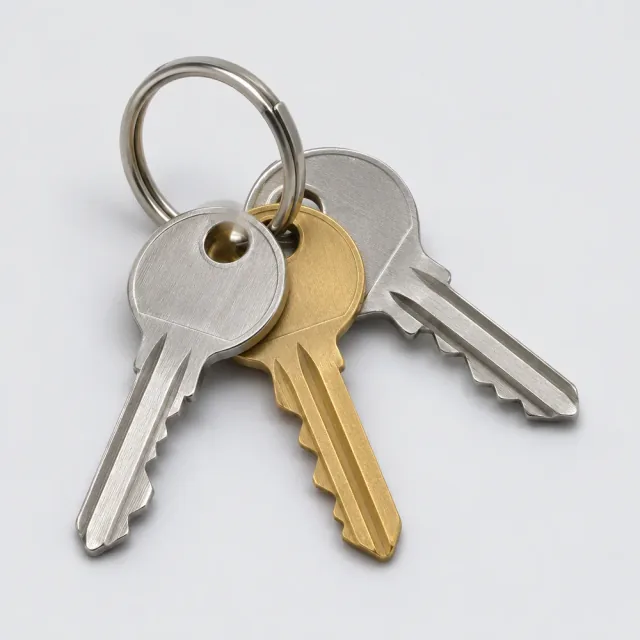
House keys
A small metal profile carries a mechanical code.
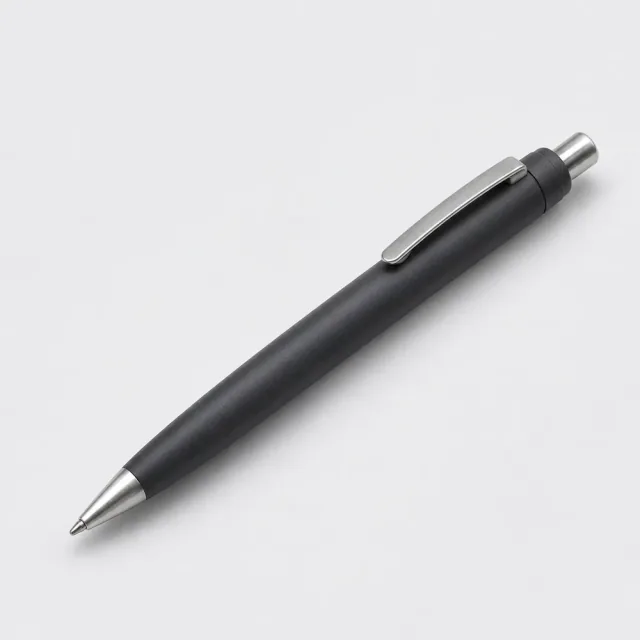
Ballpoint pen
A tiny rolling contact meters a line of ink.
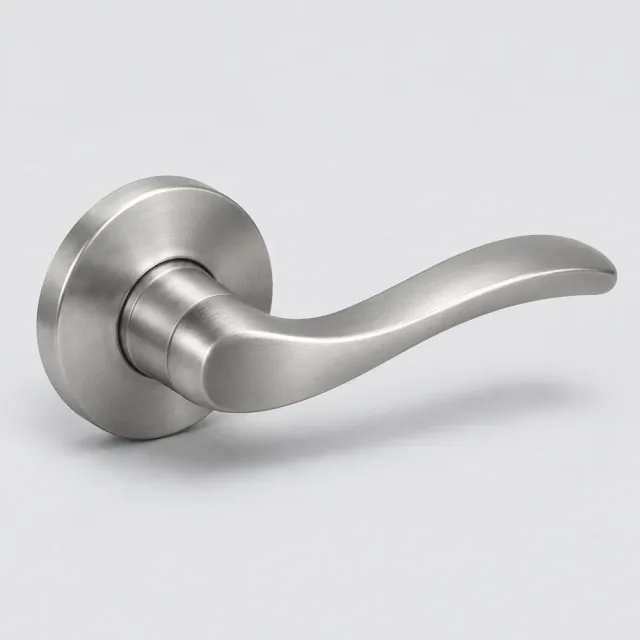
Door handle
A hand-sized lever translates a small movement into a latch action.

Acoustic guitar
A wooden resonator turns a string’s small motion into audible sound.
Follow the evidence
Original explanations informed by the sources below. Technical and industry sources support material behaviour; industry environmental marketing is not treated as a universal comparison. Browse the source register.
- Introduction to copper and copper alloys ↗Copper Information Center / International Copper Association · 2021-04-21 · Checked 2026-11-13
- Brasses ↗Copper Information Center / International Copper Association · 2021-04-29 · Checked 2026-11-13
- Preventing and Treating the Dezincification of Brass — CCI Notes 9/13 ↗Canadian Conservation Institute · Undated · Checked 2026-11-13