Insulated window
The invisible gaps matter as much as the glass.
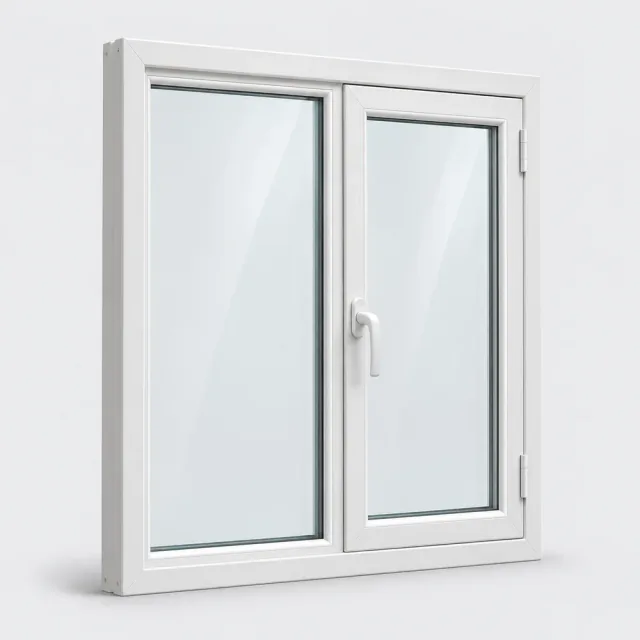
A window must admit light while separating indoor conditions from outdoor conditions. A modern insulated unit often combines two or more glass panes, a sealed space, spacers, coatings and a structural frame. The glass itself is only one part of thermal performance. This representative double-glazed window uses an aluminium frame with an insulating break; wood, vinyl and fibreglass frames offer other combinations of maintenance, stiffness and heat flow.
Start with a part, then follow a material. No specialist knowledge needed.
Inside the object
Original conceptual illustration. Numbers open the component index; their positions are illustrative, not a disassembly guide. Equivalent text follows beside the diagram.
1Glass panes
Flat soda-lime glass supplies transparency, stiffness and a weather barrier. A pane may be toughened or laminated when the application requires different breakage behaviour. Low-emissivity coatings can reduce radiative heat transfer, but the coating is a distinct thin layer; it is not a change that makes the whole pane metallic.
2Frame
An aluminium frame is stiff, weather resistant and readily made into complex profiles, but the metal also conducts heat well. Frame geometry, drainage and connections are therefore important. The same conductivity that is useful in a saucepan is a disadvantage when a frame bridges indoor and outdoor temperatures.
3Thermal break
A structural polymer strip, often reinforced polyamide, can interrupt the continuous metal route through a frame. Nylon is a polyamide family. The strip reduces conduction while transferring loads between the frame sections; it works as part of a tested assembly, not as an arbitrary plastic spacer.
4Spacer and edge seal
Spacers hold the panes apart and seals limit moisture and gas exchange around the perimeter. Aluminium spacers and silicone sealants are possible construction choices; modern warm-edge spacers also use other combinations. The edge is a functional system, not simply the border around an otherwise complete sheet of glass.
Why these materials?
Glass conducts heat, so making a pane thicker alone does not create a well-insulated window. A sealed cavity changes the heat-transfer path, and low-emissivity coatings affect radiation across that space. A thermally broken frame addresses another route around the panes. Air leakage through seals or poor installation can undermine the performance of all these materials. This is why a whole-window assessment is more meaningful than choosing on the glass label alone. Climate, orientation and shading also change the balance between admitting useful daylight and limiting unwanted solar heating.
One object, many versions.
Single glazing remains common in many places, while double and triple units serve different climates and requirements. PVC frames resist moisture; wood offers relatively low heat conduction but needs suitable protection; fibreglass profiles provide another structural option. Laminated, toughened and coated panes have different functions. A safety-glass marking or energy label applies to a specified product, not all glass of the same family.
What happens after use?
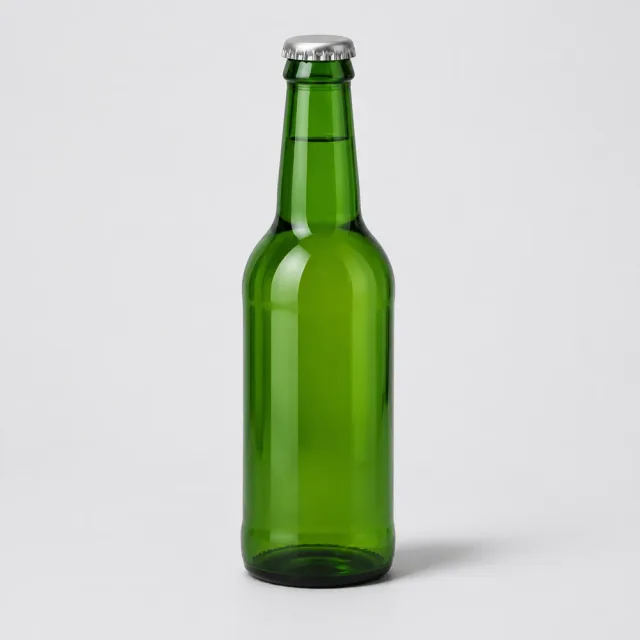
Failed hardware or seals may be repairable without replacing the entire window, although a failed sealed glazing unit often needs specialist assessment. Reuse depends on dimensions, condition and applicable building requirements. Flat window glass should not be assumed acceptable in bottle-glass collection. Glazing recyclers and construction-recovery services can advise on coatings, laminates and separation of frames from panes. Requirements differ locally.
Put the choices side by side.
Familiar things, connected.
Follow the evidence
Original explanations informed by the sources below. Technical and industry sources support material behaviour; industry environmental marketing is not treated as a universal comparison. Read our editorial method.
- What makes a window ENERGY STAR? ↗ENERGY STAR / U.S. Environmental Protection Agency · Undated · Checked 2026-11-13
- About glass ↗British Glass · Undated · Checked 2026-11-13
- How we make glass: chemistry of glass ↗Pilkington / NSG Group · Undated · Checked 2026-11-13
- About glass ↗British Glass · Undated · Checked 2026-11-13
- Quality of recycling: Towards a reference framework for the circular economy ↗European Commission Joint Research Centre · 2020 · Checked 2026-11-13
- Aluminum Production and Processing ↗The Aluminum Association · Undated · Checked 2026-11-13
- Mineral Commodity Summaries 2026 — Aluminum ↗U.S. Geological Survey, National Minerals Information Center · 2026-05-27 (version 1.3) · Checked 2026-11-13
- Nylons (Polyamide) ↗British Plastics Federation · Undated · Checked 2026-11-13
- Melt Spinning ↗Textile Exchange · Undated · Checked 2026-11-13
- Room Temperature Vulcanizing (RTV) Silicones: Material and Processing Guidelines ↗WACKER Chemie · Undated · Checked 2026-11-13
- Products & Services — Annual Report 2025 ↗WACKER Chemie · 2026 (report for 2025) · Checked 2026-11-13