Glass bottle
A continuous glass wall, closed by a very different material.
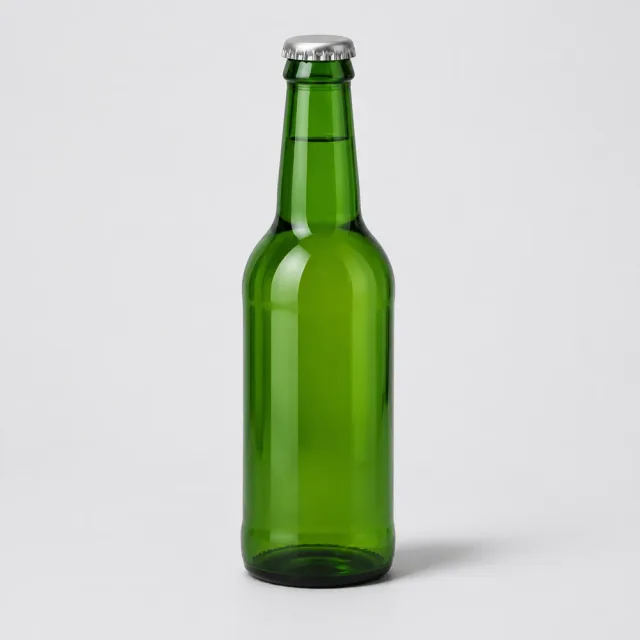
A common drink bottle is moulded from soda-lime glass, a material made by melting mineral ingredients and often recovered glass. The glass wall is a strong barrier to gases and liquids, but it is heavy relative to many polymer packages and can break. Closure, seal and label complete the package. This representative bottle shows why a container’s contents, return system and end-of-life route matter alongside the wall material.
Start with a part, then follow a material. No specialist knowledge needed.
Inside the object
Original conceptual illustration. Numbers open the component index; their positions are illustrative, not a disassembly guide. Equivalent text follows beside the diagram.
1Bottle body
Molten glass is formed into the base, wall, shoulder and neck. A continuous glass body provides the barrier; colour and surface condition influence use and appearance. Its apparent hardness does not eliminate sensitivity to surface flaws, impact or rapid temperature differences, so wall design and handling remain important.
2Closure
Different bottles use aluminium screw closures, steel crown caps or cork stoppers. These are alternatives rather than three required parts of one bottle. The closure must fit the neck and maintain the required seal, so its material and geometry are selected with the product and filling process.
3Closure liner
Many metal closures need a compliant liner to conform to the bottle’s sealing surface. Polyethylene is one possible liner family; other formulations also occur. The liner compensates for small surface differences and helps maintain containment. The metal cap alone is not necessarily the whole sealing system.
4Label
A paper or polymer label carries product information and may need to survive condensation or return washing. Adhesive chemistry and label design affect removal during recycling. A large label can also obscure the glass colour to automated sorting equipment, showing how a seemingly minor component influences recovery.
Why these materials?
Glass packaging combines a chemically durable barrier with a material that is sensitive to mechanical flaws. A bottle can perform well in a return system when designed and inspected for repeated use, but a single-use bottle should not automatically be treated as a pressure-rated refillable container. Transport weight, return distances, washing, breakage and the number of actual reuse cycles all matter in environmental comparisons. The same raw material can therefore support different systems. The bottle’s design and the collection network are part of the story, not details outside it.
One object, many versions.
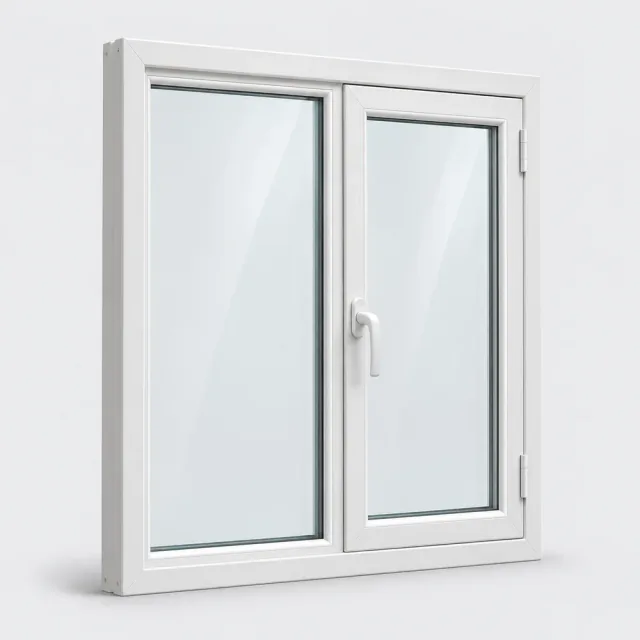
Container glass commonly belongs to the soda-lime family, while heat-resistant laboratory or kitchen glass may be borosilicate. Clear, green and amber bottles contain different colouring additions. Returnable bottles can have different wall profiles from lightweight one-way designs. Glass jars, flat window panes and ceramic mugs are separate product classes and may not share a recycling stream.
What happens after use?
Return deposit bottles through the intended system where one exists. For recycling, follow local rules for colour sorting, caps and labels. Bottle-glass processors need suitable glass feedstock; ceramic mugs, cookware and window glass can cause problems and should not be added without explicit acceptance. Handle breakage safely. Reuse of a bottle for food or pressurized contents requires a design and cleaning method appropriate to that purpose.
Put the choices side by side.
Familiar things, connected.
Follow the evidence
Original explanations informed by the sources below. Technical and industry sources support material behaviour; industry environmental marketing is not treated as a universal comparison. Read our editorial method.
- About glass ↗British Glass · Undated · Checked 2026-11-13
- Borosilicate glass ↗SCHOTT · Undated · Checked 2026-11-13
- Consumer guide to plastic resin codes ↗PET Resin Association · Undated · Checked 2026-11-13
- How we make glass: chemistry of glass ↗Pilkington / NSG Group · Undated · Checked 2026-11-13
- About glass ↗British Glass · Undated · Checked 2026-11-13
- Quality of recycling: Towards a reference framework for the circular economy ↗European Commission Joint Research Centre · 2020 · Checked 2026-11-13
- Aluminum Production and Processing ↗The Aluminum Association · Undated · Checked 2026-11-13
- Mineral Commodity Summaries 2026 — Aluminum ↗U.S. Geological Survey, National Minerals Information Center · 2026-05-27 (version 1.3) · Checked 2026-11-13
- What is steel? ↗World Steel Association · Undated · Checked 2026-11-13
- Raw materials ↗World Steel Association · Undated · Checked 2026-11-13
- What it is: cork ↗APCOR — Portuguese Cork Association · Undated · Checked 2026-11-13
- Transformation Process ↗APCOR — Portuguese Cork Association · Undated · Checked 2026-11-13
- Composite Agglomerates ↗APCOR — Portuguese Cork Association · Undated · Checked 2026-11-13
- Polyethylene (Low Density) LDPE, LLDPE ↗British Plastics Federation · Undated · Checked 2026-11-13
- Plastics Processes ↗British Plastics Federation · Undated · Checked 2026-11-13
- About Pulp & Paper ↗Confederation of European Paper Industries · Undated · Checked 2026-11-13
- How Is Paper Made Today? ↗American Forest & Paper Association · 2025-05-01 · Checked 2026-11-13
- Polypropylene (PP) ↗British Plastics Federation · Undated · Checked 2026-11-13