Plastic drink bottle
One polymer for the wall, another for the closure.
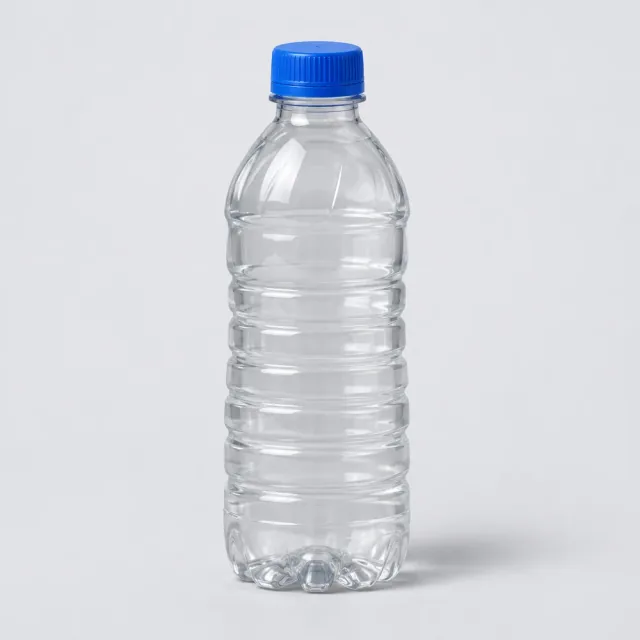
A clear drink bottle often uses PET for its body and a different plastic for its cap. PET can be stretched during moulding to make a light, strong container with useful gas-barrier properties. The label and its adhesive add another material system. This representative package is a PET water or soft-drink bottle. Milk, detergent, refillable and hot-fill bottles may have different resins, wall structures and performance requirements.
Start with a part, then follow a material. No specialist knowledge needed.
Inside the object
Original conceptual illustration. Numbers open the component index; their positions are illustrative, not a disassembly guide. Equivalent text follows beside the diagram.
1Bottle wall
A preform is heated and stretch-blow moulded into the final bottle. Drawing the polymer into the bottle shape changes its structure and performance. Ribs, shoulders and base geometry help a thin wall withstand handling and internal loads. PET is the resin family, not a complete specification for every bottle.
2Cap
Caps commonly use HDPE or polypropylene, selected for moulding, stiffness and sealing behaviour. These alternatives differ from the PET wall. Thread geometry, tamper features and any liner work together, and tethered caps may keep the closure attached after opening without making it the same polymer as the body.
3Label
A wraparound film, sleeve or paper label provides information and visual identity. Its resin, density, ink and adhesive can affect sorting and washing. Some labels detach readily in a recycling process, while others complicate it. The appearance of a clear bottle does not reveal all these attached materials.
4Tamper band
The small ring beneath a screw cap is commonly moulded with the closure and separates or flexes in a controlled way when first opened. It indicates opening history rather than preserving the drink on its own. Its geometry and material are tied to the complete closure design.
Why these materials?
PET bottles demonstrate that shape-making can change material behaviour. Stretching the preform helps create a strong thin wall, while the cap uses a resin suited to repeated opening and a precise thread. Recycling must deal with this assembly rather than a pure PET object. Some facilities separate caps and labels after shredding and washing, but their success depends on compatible design and suitable equipment. Food-contact reuse of recovered PET also requires decontamination and quality control. A resin code identifies a polymer family; it does not certify a local recycling route.
One object, many versions.
HDPE bottles are common for milk and household products and often look more opaque than clear PET drink bottles. Refillable PET, hot-fill PET and multilayer barrier bottles are designed for different conditions. Bio-based feedstock does not necessarily change the polymer’s identity or make it biodegradable. For a specific package, use its markings and local collection guidance rather than colour or feel alone.
What happens after use?
Empty the package and follow the collection service’s guidance on replacing caps, flattening and labels. Deposit schemes may have their own rules. Where suitable infrastructure exists, PET can be sorted, washed and reprocessed into bottles, fibres or other products; these are different destinations rather than one guaranteed closed loop. Do not place a polyester garment in bottle collection just because it may share the same underlying polymer.
Put the choices side by side.
Familiar things, connected.
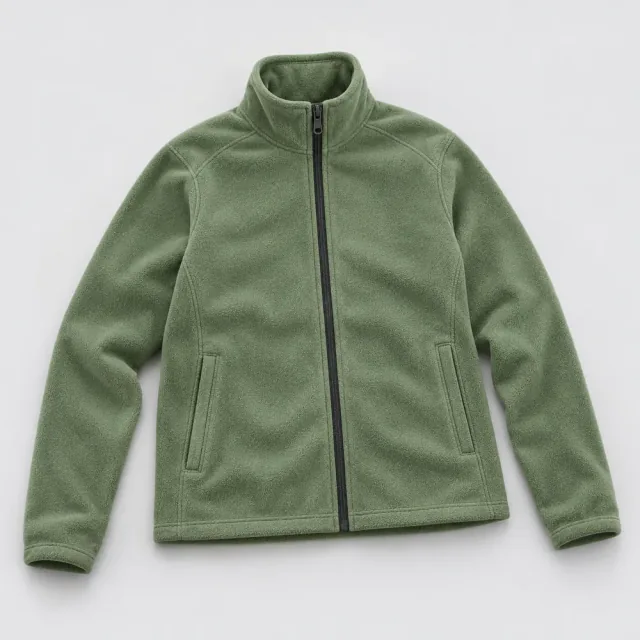
Fleece jacket
A familiar bottle polymer, rearranged into warmth.
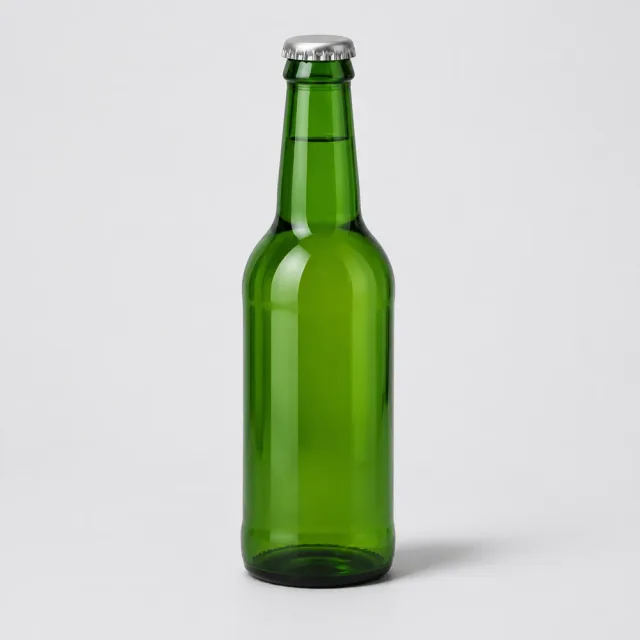
Glass bottle
A continuous glass wall, closed by a very different material.
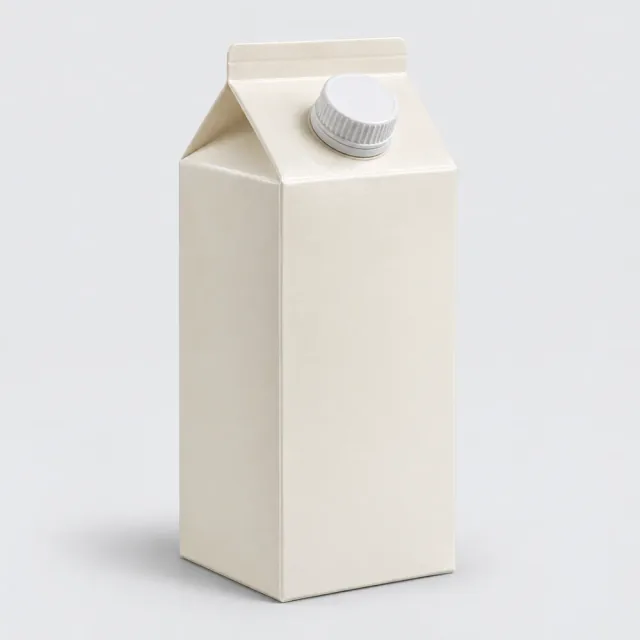
Milk carton
Paper supplies stiffness; very thin layers supply barriers.
Follow the evidence
Original explanations informed by the sources below. Technical and industry sources support material behaviour; industry environmental marketing is not treated as a universal comparison. Read our editorial method.
- PET frequently asked questions ↗PET Resin Association · Undated · Checked 2026-11-13
- Consumer guide to plastic resin codes ↗PET Resin Association · Undated · Checked 2026-11-13
- Can plastic bottle caps be recycled? ↗McGill University · Undated · Checked 2026-11-13
- Polyesters (Thermoplastic) PETP, PBT, PET ↗British Plastics Federation · Undated · Checked 2026-11-13
- Plastics Processes ↗British Plastics Federation · Undated · Checked 2026-11-13
- The Facts about PET ↗Dr Frank Welle; Petcore Europe · 2018 · Checked 2026-11-13
- Polyethylene (High Density) HDPE ↗British Plastics Federation · Undated · Checked 2026-11-13
- How Do I Recycle Common Recyclables ↗U.S. Environmental Protection Agency · Undated · Checked 2026-11-13
- Polypropylene (PP) ↗British Plastics Federation · Undated · Checked 2026-11-13
- About Pulp & Paper ↗Confederation of European Paper Industries · Undated · Checked 2026-11-13
- How Is Paper Made Today? ↗American Forest & Paper Association · 2025-05-01 · Checked 2026-11-13