Fleece jacket
A familiar bottle polymer, rearranged into warmth.
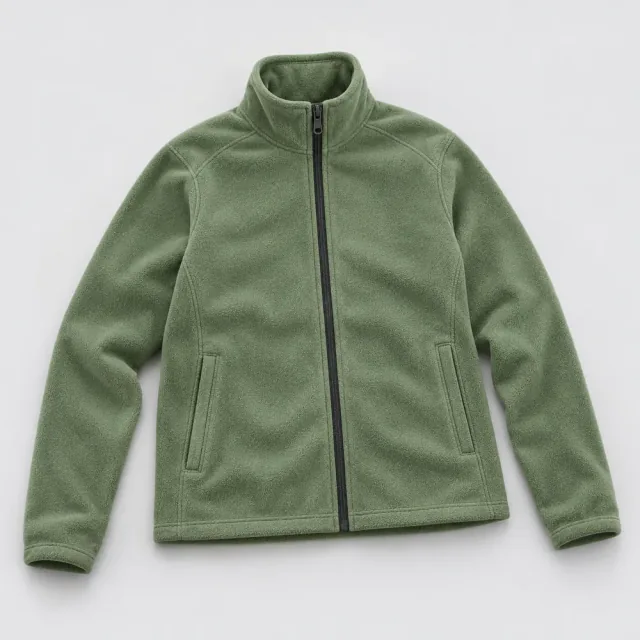
A conventional synthetic fleece jacket uses polyester fibres to create a lofted textile that holds pockets of air. Those still air spaces help slow heat transfer. The polymer can belong to the same PET family used for drink bottles, but fibre formation and fabric construction create a very different object. This example includes a zip, seam threads and pocket lining; fibre blends and coatings can vary considerably between products.
Start with a part, then follow a material. No specialist knowledge needed.
Inside the object
Original conceptual illustration. Numbers open the component index; their positions are illustrative, not a disassembly guide. Equivalent text follows beside the diagram.
1Lofted outer fabric
Polyester yarn is knitted and its surface may be brushed or raised to produce a soft pile. The textile’s air-holding structure supplies much of its insulating function. Fibre thickness, fabric density and pile geometry matter, so the polymer name alone does not specify warmth or wind resistance.
2Pocket lining and binding
Lighter knitted or woven fabrics can line pockets and reinforce edges without adding the full bulk of the fleece. Nylon or polyester are possible choices. These regions face different abrasion and stretch demands from the jacket body, explaining why one garment can use several textile constructions.
3Zip
A zip can use nylon coil teeth on polyester tape with a metal slider, often a zinc alloy, although other constructions exist. The coil, tape and slider have separate jobs. A small failure in this assembly can make a largely intact jacket inconvenient to use.
4Seams and labels
Strong sewing threads and woven labels often use polyester, though they need not match the body fabric’s precise composition or colour. Seams join panels while allowing suitable flexibility. Finishing details affect repair and sorting even when they are visually less prominent than the fleece surface.
Why these materials?
The surprising connection between a bottle and a fleece is molecular rather than visual. PET can be shaped as a container or spun into fibres. In fleece, much of the useful volume is air trapped between fine fibres rather than solid polymer. Recycled bottle feedstock can enter fibre production, but that is not automatically a closed bottle-to-bottle loop or a guarantee that the jacket will later become another jacket. Wear and washing can release fibres, and design, fabric structure and care all influence shedding and service life.
One object, many versions.
Some fleeces combine polyester with elastane, nylon, wool or membranes, while others use a single main fibre family. Recycled content refers to the origin of some feedstock and does not imply biodegradable fibres. Wind-resistant laminated fleece has a different layer structure from an open pile fabric. Compare the actual product label and construction instead of treating every fleece as identical.
What happens after use?
Repairing a seam or replacing a zip can preserve the value of the fabric. Reuse remains useful when the garment is wearable. Textile recycling depends on fibre composition, trims, dyes and access to a suitable processor; a polyester label does not authorize disposal with PET bottles. Follow the care instructions and avoid unnecessary laundering, while recognizing that no routine washing method makes fibre shedding disappear entirely.
Put the choices side by side.
Familiar things, connected.
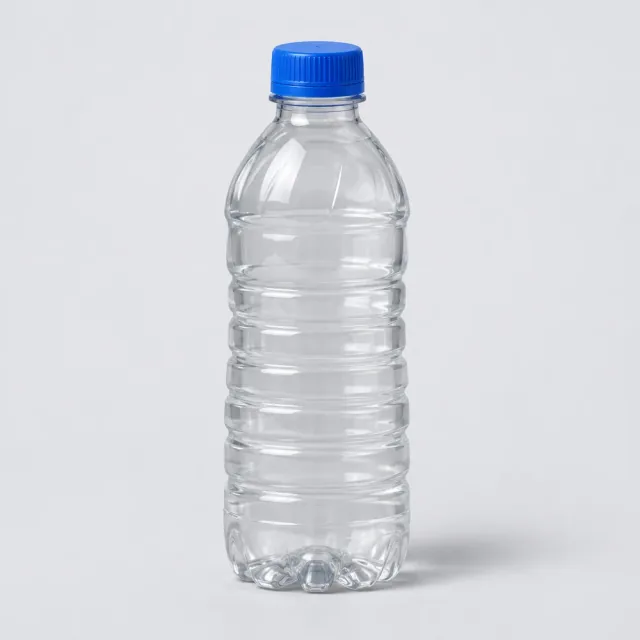
Plastic drink bottle
One polymer for the wall, another for the closure.
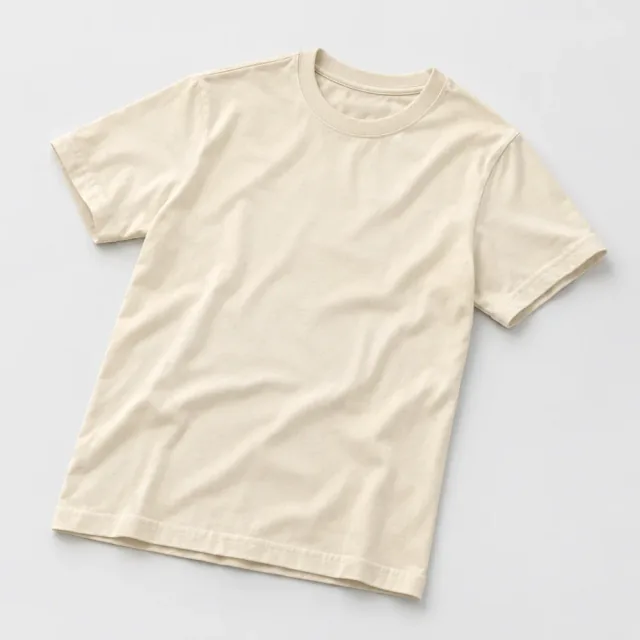
Cotton T-shirt
Plant fibres become yarn, then a flexible looped fabric.
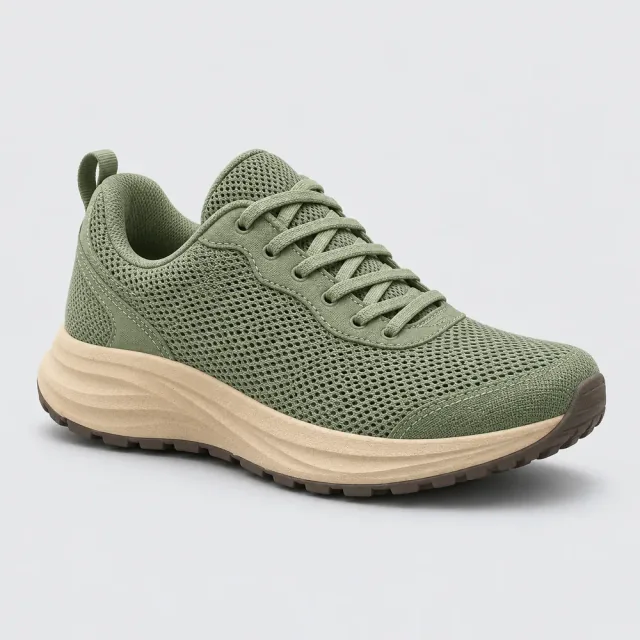
Running shoe
A hard-wearing surface, a soft middle, a flexible shell.
Follow the evidence
Original explanations informed by the sources below. Technical and industry sources support material behaviour; industry environmental marketing is not treated as a universal comparison. Read our editorial method.
- Polyester: Virgin & Recycled ↗Patagonia · Undated · Checked 2026-11-13
- Cotton: The New Generation ↗American Association of Textile Chemists and Colorists · Undated · Checked 2026-11-13
- PET frequently asked questions ↗PET Resin Association · Undated · Checked 2026-11-13
- Polyesters (Thermoplastic) PETP, PBT, PET ↗British Plastics Federation · Undated · Checked 2026-11-13
- Melt Spinning ↗Textile Exchange · Undated · Checked 2026-11-13
- Microplastics from textiles: towards a circular economy for textiles in Europe ↗European Environment Agency · 2022 · Checked 2026-11-13
- Nylons (Polyamide) ↗British Plastics Federation · Undated · Checked 2026-11-13
- Zinc — element information, properties and uses ↗Royal Society of Chemistry · Undated · Checked 2026-11-13
- Mineral Commodity Summaries 2026 — Zinc ↗U.S. Geological Survey, National Minerals Information Center · 2026-05-27 (version 1.3) · Checked 2026-11-13