Cotton T-shirt
Plant fibres become yarn, then a flexible looped fabric.
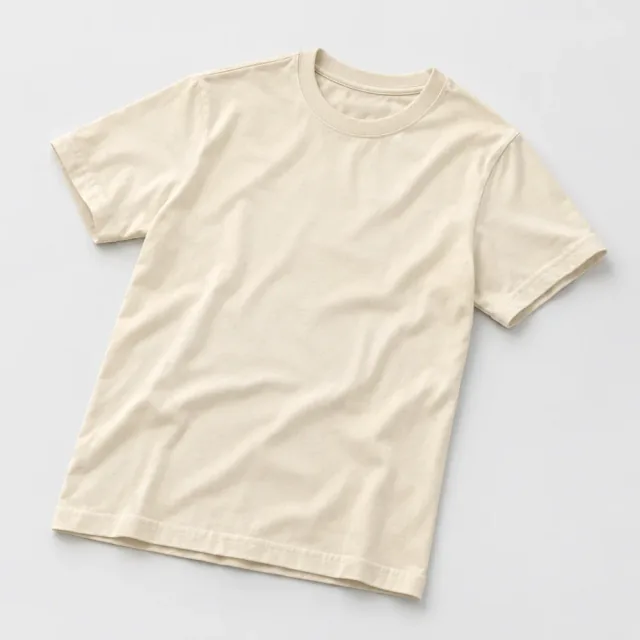
A simple cotton T-shirt is made through several transformations: a plant produces seed fibres, the fibres are cleaned and spun, and yarn is knitted into fabric. Cutting, sewing, dyeing and finishing create the garment. Cotton is the main material in this example, but seams, labels and decorative finishes can introduce other materials. A label stating cotton content describes fibre composition, not the complete resource history or environmental performance of the shirt.
Start with a part, then follow a material. No specialist knowledge needed.
Inside the object
Original conceptual illustration. Numbers open the component index; their positions are illustrative, not a disassembly guide. Equivalent text follows beside the diagram.
1Body fabric
Cotton fibres are spun into yarn and knitted into interlocking loops. The loops provide stretch even though an individual cotton fibre is not an elastic band. Fabric weight, yarn structure and finishing influence drape, ventilation and durability alongside the identity of the fibre itself.
2Neck rib
A rib-knit collar uses a different loop structure from the main body so it can stretch over the head and recover its shape. Some collars contain elastane, which lies outside this atlas. The collar therefore shows how textile structure can create a different function from closely related yarn.
3Seam thread
Sewing thread joins the cut fabric panels. Polyester, cotton or combined threads can be chosen for strength, processing and wash performance. A cotton garment may consequently contain non-cotton sewing thread. This small addition can matter when a recycling process needs a narrowly controlled fibre stream.
4Labels and decoration
Care and size labels may be woven polyester or printed fabric, while a removable retail tag may be paperboard. Printed designs use inks or polymer binders with their own chemistry. These are distinct components and finishes rather than changes to the identity of the underlying cotton fibres.
Why these materials?
Cotton’s cellulose fibres absorb moisture, but the sensation of wearing a shirt also depends on how the fabric is built. A loose, open knit behaves differently from a dense heavy one. Dyeing and finishing can change shrinkage, handle and moisture movement. Agricultural practices, processing energy, garment durability and laundering all contribute to its wider impacts, so natural origin does not establish an automatic environmental ranking. The assembled garment also contains joins and trims: these make it useful to wear, while adding considerations for repair and fibre recovery.
One object, many versions.
Cotton shirts may use different cotton grades, recycled fibres, blended polyester or stretch fibres. Fibre percentages on the label help identify these choices but do not reveal all dyes and finishes. Wool and synthetic shirts serve overlapping purposes through different moisture and insulation behaviour. A familiar garment shape therefore does not specify a single textile or production method.
What happens after use?
Repair a loose seam or small hole when practical and pass on a clean wearable garment. Textile collection should distinguish items suitable for reuse from material intended for recycling. Mechanical fibre recovery can shorten fibres and blended fabrics may need different processing. Local acceptance varies, and ordinary paper recycling is unsuitable despite cellulose being present in both cotton and paper. Follow the care label to preserve the garment.
Put the choices side by side.
Familiar things, connected.

Follow the evidence
Original explanations informed by the sources below. Technical and industry sources support material behaviour; industry environmental marketing is not treated as a universal comparison. Read our editorial method.
- Cotton: The New Generation ↗American Association of Textile Chemists and Colorists · Undated · Checked 2026-11-13
- Polyester: Virgin & Recycled ↗Patagonia · Undated · Checked 2026-11-13
- Textile Fibers ↗Cotton Incorporated · 2013 · Checked 2026-11-13
- Fiber Preparation for Spinning ↗Cotton Incorporated / CottonWorks · Undated · Checked 2026-11-13
- Polyesters (Thermoplastic) PETP, PBT, PET ↗British Plastics Federation · Undated · Checked 2026-11-13
- Melt Spinning ↗Textile Exchange · Undated · Checked 2026-11-13
- Microplastics from textiles: towards a circular economy for textiles in Europe ↗European Environment Agency · 2022 · Checked 2026-11-13
- About Pulp & Paper ↗Confederation of European Paper Industries · Undated · Checked 2026-11-13
- How Is Paper Made Today? ↗American Forest & Paper Association · 2025-05-01 · Checked 2026-11-13