Chair
A frame carries the load; softer layers manage contact.
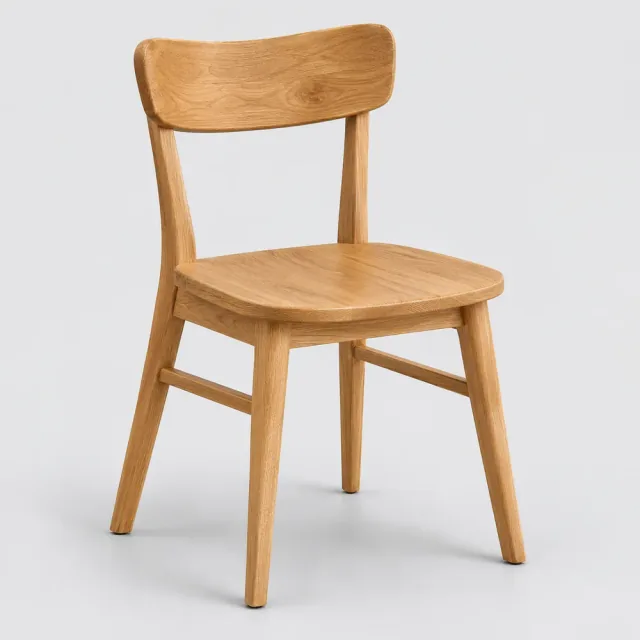
A chair is a structure designed around a human body. Its frame must remain stable under changing loads, while its seat and back distribute contact. An upholstered wooden chair adds foam, fabric and fastening materials to the structural wood. This representative construction shows those roles. Moulded plastic, tubular steel and all-wood chairs solve the same broad task differently, so there is no universal chair material or one environmental ranking.
Start with a part, then follow a material. No specialist knowledge needed.
Inside the object
Original conceptual illustration. Numbers open the component index; their positions are illustrative, not a disassembly guide. Equivalent text follows beside the diagram.
1Frame
Solid wood or engineered wood members provide the primary load paths. Grain direction, moisture, joints and member shape affect strength and movement. Wood is therefore not an identical material in every direction. A sound chair depends on how the members are selected and joined, not just the species named on its label.
2Seat support
A plywood or solid-wood seat support can span between frame members, while metal brackets and screws reinforce selected connections. Other chairs use webbing or springs. The support is distinct from the soft cushion above it: a comfortable cover cannot compensate for a cracked or loose load-bearing joint.
3Cushion
Flexible polyurethane foam compresses under a seated load and helps spread contact pressure. Its cellular structure, density and firmness influence feel and durability. A soft surface is not the same as structural support. Other cushions use fibre fills, latex or spring systems, each with different construction details.
4Upholstery
A woven cover protects the cushioning and supplies a chosen texture and abrasion response. Polyester and wool are possible fibre choices, separately or in blends; the depicted generic chair does not imply both are mandatory. Weave, finish, removable-cover design and seam quality matter alongside fibre identity.
5Feet and fixings
Polymer glides can protect the floor and reduce direct contact between the frame and surface, while steel fasteners connect replaceable parts. Felt or cork pads are alternatives in some designs. These small components may be easy to renew and can prevent a minor fault from shortening the chair’s useful life.
Why these materials?
A chair’s materials are arranged by function. The frame needs stability and strength, the cushion needs controlled deformation, and the cover needs a comfortable but durable surface. Upholstery does not determine the strength of the frame, and a heavy frame does not prove comfortable seating. Joints are especially important because loads concentrate where parts meet. A design with accessible screws, replaceable glides and removable covers can be maintained in ways that a permanently bonded assembly cannot. Repairability is therefore part of the object’s material story, even though it is not itself a substance.
One object, many versions.
An all-wood chair omits upholstery, while a moulded polypropylene shell may sit on steel legs. Bent plywood, cast aluminium, woven natural fibres and upholstered steel frames provide other solutions. Foam and fabric composition vary, and some furnishings contain coatings or treatments not visible from the surface. A natural-looking finish can conceal an engineered wood panel rather than solid timber.
What happens after use?
Check and repair loose joints or worn glides through an appropriate furniture repair route before they damage other parts. Reupholstery can preserve a sound frame when practical. Donate only a serviceable chair and follow local rules for upholstered goods. At end of use, bulky-waste or specialist furniture recovery services may separate wood, metal and textiles. Coated or engineered wood should not automatically be treated as untreated compostable timber.
Put the choices side by side.
Familiar things, connected.
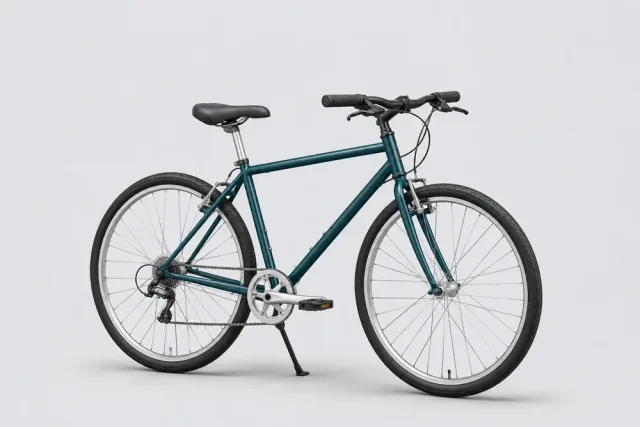
Bicycle
Strength depends on shape as well as substance.
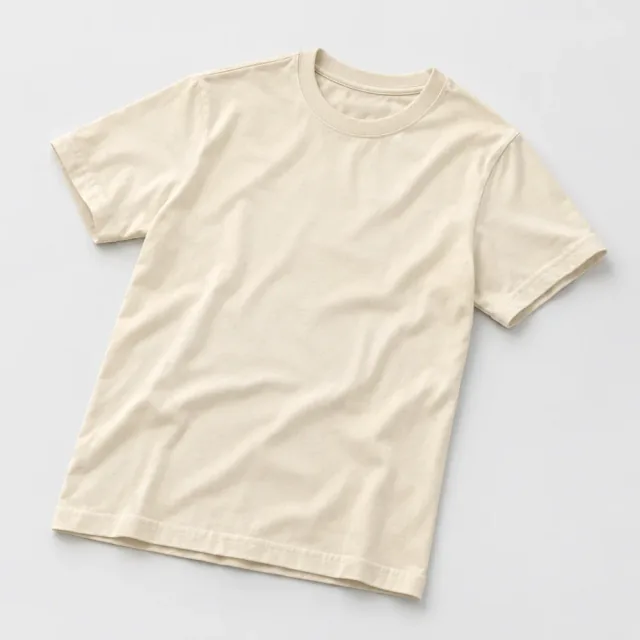
Cotton T-shirt
Plant fibres become yarn, then a flexible looped fabric.

Running shoe
A hard-wearing surface, a soft middle, a flexible shell.
Follow the evidence
Original explanations informed by the sources below. Technical and industry sources support material behaviour; industry environmental marketing is not treated as a universal comparison. Read our editorial method.
- VIHALS chair: materials and care ↗IKEA · Undated · Checked 2026-11-13
- STEFAN chair: materials and care ↗IKEA · Undated · Checked 2026-11-13
- STRANDMON armchair: materials and care ↗IKEA · Undated · Checked 2026-11-13
- Wood Handbook: Wood as an Engineering Material ↗USDA Forest Service, Forest Products Laboratory · 2021 (handbook revision) · Checked 2026-11-13
- Wood Handbook, Chapter 4: Moisture relations and physical properties of wood ↗Samuel V. Glass and Samuel L. Zelinka; USDA Forest Service · 2021-03 · Checked 2026-11-13
- What is steel? ↗World Steel Association · Undated · Checked 2026-11-13
- Raw materials ↗World Steel Association · Undated · Checked 2026-11-13
- Frequently asked questions on polyurethanes ↗ISOPA / Polyurethanes.org · Undated · Checked 2026-11-13
- The chemistry of polyurethanes ↗Danielle Williams, Lawrence Industries · Undated · Checked 2026-11-13
- Polyesters (Thermoplastic) PETP, PBT, PET ↗British Plastics Federation · Undated · Checked 2026-11-13
- Melt Spinning ↗Textile Exchange · Undated · Checked 2026-11-13
- Microplastics from textiles: towards a circular economy for textiles in Europe ↗European Environment Agency · 2022 · Checked 2026-11-13
- What is the Wool Fibre? ↗The Woolmark Company · Undated · Checked 2026-11-13
- How Wool is Made — Processing and Manufacturing ↗The Woolmark Company · Undated · Checked 2026-11-13
- Machine Washable Wool ↗The Woolmark Company · Undated · Checked 2026-11-13
- Polypropylene (PP) ↗British Plastics Federation · Undated · Checked 2026-11-13
- Plastics Processes ↗British Plastics Federation · Undated · Checked 2026-11-13