Bicycle
Strength depends on shape as well as substance.
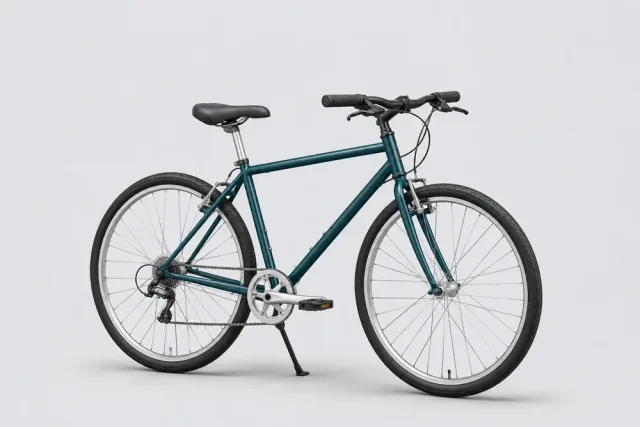
A bicycle is a moving structure that repeatedly bends, rolls, grips and wears. Its frame needs stiffness and fatigue resistance; its tyres need controlled flexibility. Bearings and chain links must tolerate concentrated contact loads. This example is an aluminium-frame, chain-driven bicycle. The important lesson is that a material name alone cannot predict weight, comfort or durability: tube shape, joints, dimensions and manufacturing quality matter alongside composition.
Start with a part, then follow a material. No specialist knowledge needed.
Inside the object
Original conceptual illustration. Numbers open the component index; their positions are illustrative, not a disassembly guide. Equivalent text follows beside the diagram.
1Frame tubes
Aluminium alloys allow relatively light, shaped tubing. Designers usually use larger tube diameters than in a traditional steel frame to achieve the required stiffness. Welds and heat treatment affect performance, so replacing a tube material without redesigning the geometry would not produce an equivalent bicycle.
2Chain and bearings
Steel chain links, pins and bearing surfaces withstand repeated contact and wear. They are manufactured and treated for their particular duties, rather than cut from generic soft steel. Lubrication and keeping abrasive dirt out also influence their useful life; material choice cannot remove the need for maintenance.
3Wheel rims and spokes
An aluminium rim carries tyre loads and transfers them to tensioned spokes, often stainless steel. The wheel behaves as an assembled structure: spoke tension, rim geometry and hub connections matter together. A broken spoke is therefore not simply a problem of the strength of its constituent metal.
4Tyres
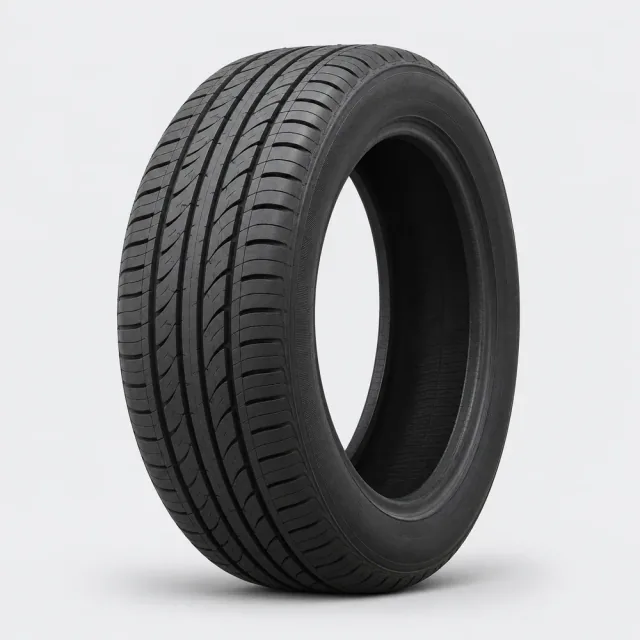
Tyre rubber compounds provide grip and flexibility, while a woven or cord fabric casing carries load and limits stretching. Nylon is one possible reinforcement. Bicycle tyres also contain synthetic rubbers, fillers and beads; the natural-rubber link describes one ingredient rather than the complete tyre recipe.
Why these materials?
The frame is an accessible example of material and geometry working together. A larger hollow tube can resist bending efficiently while using a thin wall. That does not make every large-tube frame better: dent resistance, joining method, fatigue, clearance and intended riding loads still constrain the design. Elsewhere, a bicycle deliberately uses more wear-resistant steel where rolling or sliding contact is severe. Tyres reverse the requirement again, using flexible compounds and reinforcing fibres. The object is optimized as an assembly, not by choosing one celebrated material everywhere.
One object, many versions.
Steel, titanium and carbon-fibre composite frames are established alternatives. Carbon composite can place fibres in selected directions, but damage assessment and repair differ from metal construction. Steel frames may be easier for some specialists to repair, though a particular damaged frame is not automatically repairable. Electric bicycles add a battery, motor and electronics that need separate end-of-life handling.
What happens after use?
Repair, adjustment and replacement of worn consumables can keep a bicycle useful for many years. A competent bicycle mechanic can assess safety-critical damage; a material label is not a diagnosis. Metal parts can enter appropriate scrap streams after separation, while tyres and composite frames require locally available specialist routes. An electric bicycle’s battery must follow dedicated battery collection guidance rather than metal scrap disposal.
Put the choices side by side.
Familiar things, connected.


Follow the evidence
Original explanations informed by the sources below. Technical and industry sources support material behaviour; industry environmental marketing is not treated as a universal comparison. Read our editorial method.
- Frame Materials for the Touring Cyclist ↗Sheldon Brown; revised by John Allen · 2010-08 · Checked 2026-11-13
- Materials: Basic knowledge of tires ↗Bridgestone · Undated · Checked 2026-11-13
- Used Lithium-Ion Batteries ↗U.S. Environmental Protection Agency · Undated · Checked 2026-11-13
- Aluminum Production and Processing ↗The Aluminum Association · Undated · Checked 2026-11-13
- Mineral Commodity Summaries 2026 — Aluminum ↗U.S. Geological Survey, National Minerals Information Center · 2026-05-27 (version 1.3) · Checked 2026-11-13
- What is steel? ↗World Steel Association · Undated · Checked 2026-11-13
- Raw materials ↗World Steel Association · Undated · Checked 2026-11-13
- General principles for selection of stainless steels ↗British Stainless Steel Association · Undated · Checked 2026-11-13
- Recycling ↗worldstainless · Undated · Checked 2026-11-13
- Natural Rubber at a glance ↗Michelin · Undated · Checked 2026-11-13
- Introduction to rubber processing and safety issues ↗UK Health and Safety Executive · Undated · Checked 2026-11-13
- Nylons (Polyamide) ↗British Plastics Federation · Undated · Checked 2026-11-13
- Melt Spinning ↗Textile Exchange · Undated · Checked 2026-11-13