PET
Polyethylene terephthalate, or PET, is a polyester used in clear drinks bottles, films and fibres. The chemistry is shared, but processing creates very different structures. Stretching a bottle preform improves the useful orientation of its polymer chains; spinning and drawing a fibre makes a textile filament. PET is not polyethylene, despite the similar name, and a bottle is not necessarily made from exactly the same grade as a jacket.
Useful properties
Why it earns its placeFrom input to useful material.
A simplified industrial pathway. Select a stage to learn what changes. Recycled feedstock and other process variants can enter at different stages.
Origins & processing
PET is made by reacting chemical building blocks, commonly terephthalic acid and ethylene glycol, to form long chains. Conventional feedstocks come mainly from petrochemical routes; some ingredients can have other origins. Resin is dried and processed under controlled conditions. Bottles commonly begin as injection-moulded preforms that are reheated, stretched and blown into shape. Fibre production uses spinning instead. Recovered PET can provide feedstock, but contamination, molecular degradation and application requirements determine the additional treatment needed.
Where it turns up
A drinks bottle, polyester fleece and a thin film can share PET chemistry while demanding different purity, colour and performance. Bottle closures are often made from another polymer. Some packaging also uses coatings or extra layers, so identifying the bottle body does not establish the entire pack’s construction or recycling behaviour.
Useful, with limits.
PET has finite gas-barrier and temperature performance; not every bottle is designed for hot filling or repeated use. Colour, labels, adhesives and multilayer structures can complicate recycling. A transparent appearance is not a reliable polymer identifier. Recycled content describes an input, while recyclability describes a potential output route; one does not guarantee the other.
A next life depends on the system.
Collected bottles can be sorted, washed and processed into new feedstock, sometimes for bottles and sometimes for other products. Food-contact applications need appropriate controls. Textiles made from the same polymer usually enter different collection systems and are harder to separate from blends. Check local acceptance of the complete packaging item rather than relying only on its resin code.
Familiar things, connected.
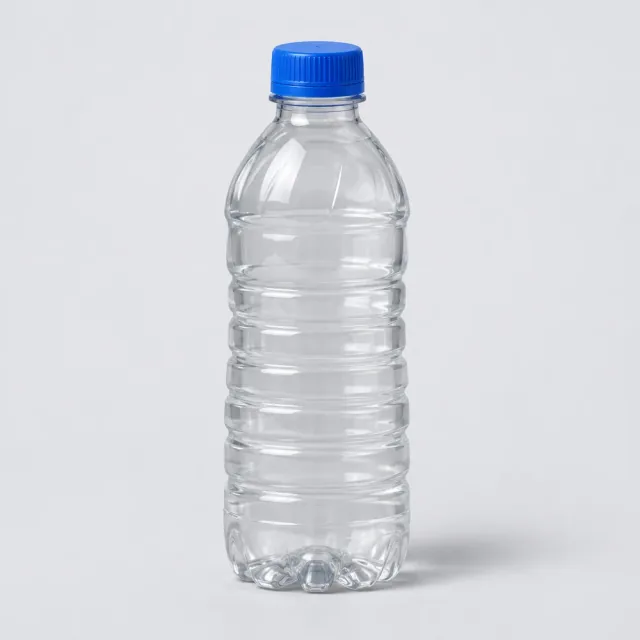
Plastic drink bottle
One polymer for the wall, another for the closure.
Soap dispenser
A small pump turns a hand movement into controlled liquid flow.
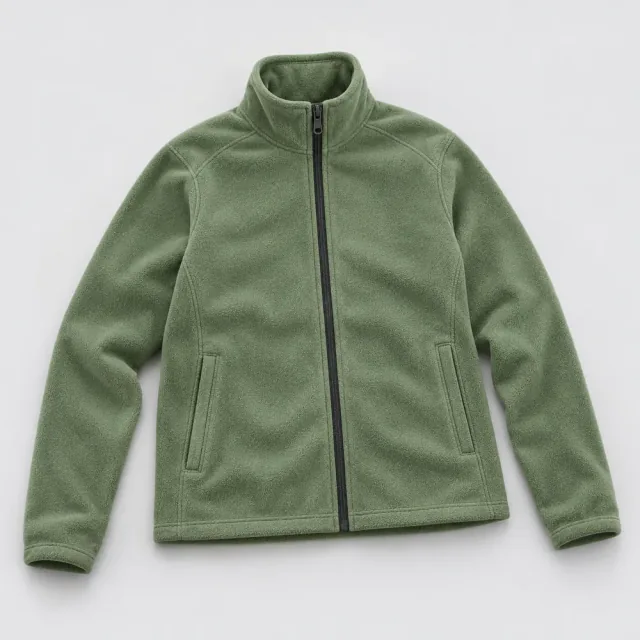
Fleece jacket
A familiar bottle polymer, rearranged into warmth.
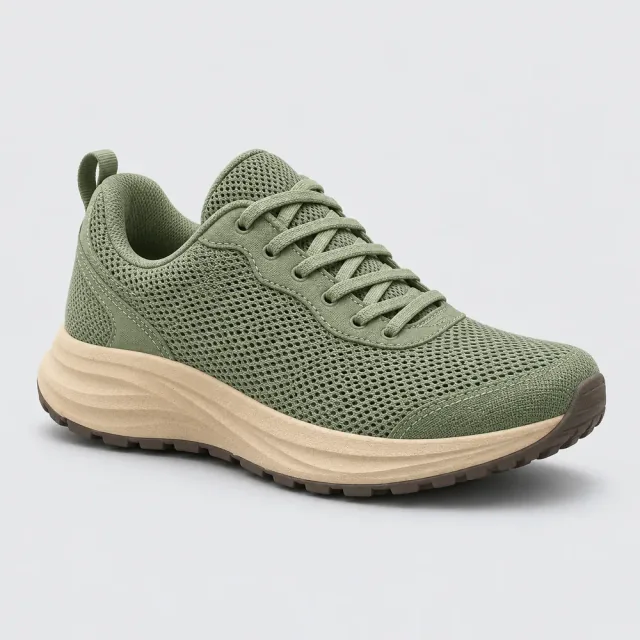
Running shoe
A hard-wearing surface, a soft middle, a flexible shell.
Follow the evidence
Original explanations informed by the sources below. Technical and industry sources support material behaviour; industry environmental marketing is not treated as a universal comparison. Browse the source register.
- Polyesters (Thermoplastic) PETP, PBT, PET ↗British Plastics Federation · Undated · Checked 2026-11-13
- Plastics Processes ↗British Plastics Federation · Undated · Checked 2026-11-13
- The Facts about PET ↗Dr Frank Welle; Petcore Europe · 2018 · Checked 2026-11-13