Drink can
Two alloys, a thin barrier, and a very efficient shape.
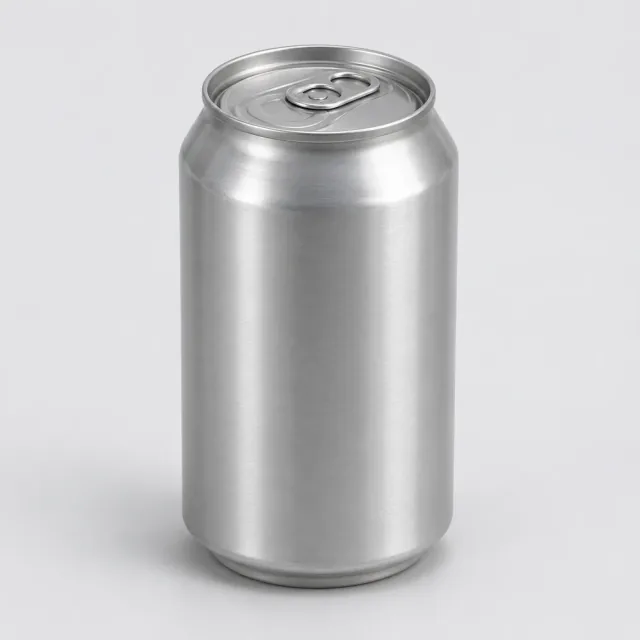
An aluminium beverage can is a lightweight pressure vessel as well as a package. Its body, lid and tab are shaped for different tasks and commonly use different aluminium alloys. A thin internal coating separates the drink from the metal, while external printing carries information. This representative two-piece can is not a sheet of pure aluminium folded into a tube; manufacturing and geometry are central to its performance.
Start with a part, then follow a material. No specialist knowledge needed.
Inside the object
Original conceptual illustration. Numbers open the component index; their positions are illustrative, not a disassembly guide. Equivalent text follows beside the diagram.
1Drawn body
A sheet-metal blank is drawn and ironed into a thin-walled body with an integral base. The alloy must tolerate severe forming without losing the required final strength. The curved base and cylindrical wall distribute loads, allowing a surprisingly small amount of metal to contain the drink.
2Lid
The lid uses an aluminium alloy selected for stiffness and controlled opening behaviour, often different from the body alloy. A scored region guides the opening action. It is mechanically seamed to the body, so joint geometry is part of containment rather than an incidental decorative edge.
3Stay-on tab
The tab is formed from aluminium alloy and connected to the lid so that a small hand force can initiate opening at the scored panel. Its shape supplies leverage. It is designed as part of the lid system, not as a general-purpose piece of soft aluminium foil.
4Internal coating and printing
A very thin polymer coating limits contact between drink and metal. Coating chemistry varies, including epoxy-based and alternative systems, so no single polymer is assumed here. Printing and protective exterior coatings add further layers. Their small mass does not mean they are irrelevant to food-contact performance or processing.
Composition explained here; no separate material entry in this edition.
Why these materials?
Can design combines material efficiency with high-volume manufacturing. The side wall can be very thin because its curved shape and, for carbonated drinks, internal pressure contribute to the structure. The base and lid experience different loads and therefore have different profiles. A corrosion-resistant barrier is still required inside, despite aluminium’s own surface oxide. Recycling also encounters a designed mixture: body and lid alloys contain different additions. Remelting recovers metal, but maintaining suitable alloy chemistry requires management of the incoming scrap, not simply melting every aluminium object together.
One object, many versions.
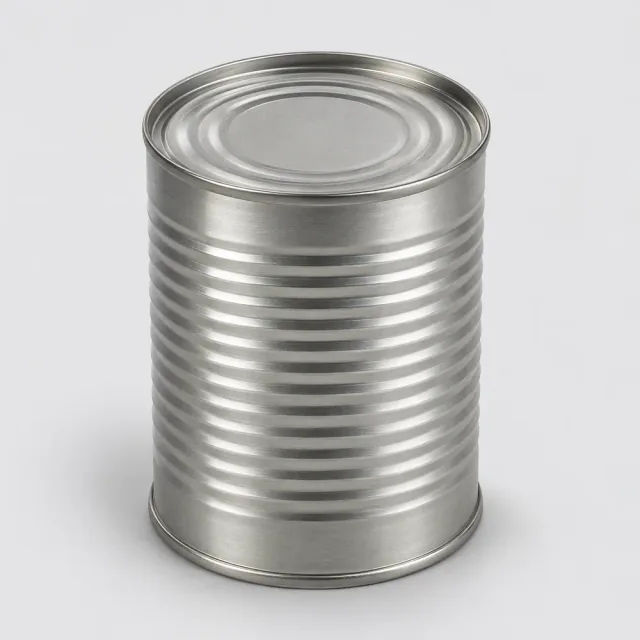
Some beverage cans use steel bodies, and sizes, coatings and alloy specifications differ across markets. Still drinks and carbonated drinks impose different demands. An aluminium bottle, aerosol container and food tray are also manufactured and used differently. This diagram explains the common two-piece beverage can without claiming that all metal drink packages share one exact construction.
What happens after use?
Empty cans are accepted by many deposit and metal-packaging systems, but participation and preparation rules are local. Keep them free of non-packaging contents and follow the collection service’s instructions about crushing. After sorting, coatings are removed and the metal can be remelted into suitable products. Collection, sorting and melt losses mean that physical recyclability should not be described as an automatic or perfectly lossless loop.
Familiar things, connected.
Follow the evidence
Original explanations informed by the sources below. Technical and industry sources support material behaviour; industry environmental marketing is not treated as a universal comparison. Read our editorial method.
- Background on Aluminum Containers ↗The Aluminum Association · Undated · Checked 2026-11-13
- Can-to-can recycling factsheet ↗International Aluminium Institute · 2025-09 · Checked 2026-11-13
- Aluminum Production and Processing ↗The Aluminum Association · Undated · Checked 2026-11-13
- Mineral Commodity Summaries 2026 — Aluminum ↗U.S. Geological Survey, National Minerals Information Center · 2026-05-27 (version 1.3) · Checked 2026-11-13