Food can
Mostly steel, despite the familiar name “tin”.
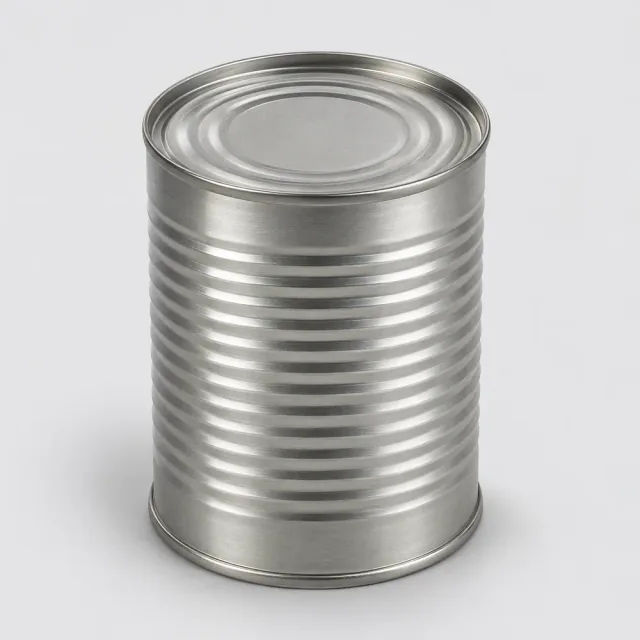
A traditional tinplate food can uses a thin layer of tin on steel. The steel supplies most of the structure; the tin and internal coatings help protect the contents and container. Its seams must remain sealed through handling and, for many canned foods, heat processing. This example is a three-piece steel can with a cylindrical body and separate ends. Other metal packages use two-piece construction or different coatings.
Start with a part, then follow a material. No specialist knowledge needed.
Inside the object
Original conceptual illustration. Numbers open the component index; their positions are illustrative, not a disassembly guide. Equivalent text follows beside the diagram.
1Steel body
Thin steel sheet can be formed into a rigid container that resists handling loads. In a three-piece can the body has a side seam as well as joined ends. The steel’s formability, strength and thickness must suit that geometry; a protective coating cannot compensate for a poorly made structural joint.
2Tin coating
Tinplate is steel with a thin tin surface layer. The tin supports corrosion protection and processing behaviour, while the underlying steel carries most of the load. The familiar phrase tin can therefore describes a coating system rather than an object made throughout from the relatively soft tin metal.
3Ends and seams
The top and bottom are formed metal ends attached with controlled seams. Their shapes help withstand pressure differences during processing and storage. Opening features vary. Seam integrity is central to food preservation, which is why a visibly damaged package cannot be judged only by the apparent condition of the metal.
4Internal barrier
An internal coating can separate food from metal and reduce unwanted chemical interactions. Epoxy-based, polyester and other coating systems are used, depending on the product and requirements. The formulation is not assumed here. A coating is a very small part of the package by mass but can be essential to its service.
Composition explained here; no separate material entry in this edition.
Why these materials?
A food can is both a structural shell and a chemical barrier. Steel can be made thin while remaining rigid enough for distribution, but exposed steel would be vulnerable to corrosion. Tin and internal coatings adjust the surface behaviour without requiring the entire can to be made from a different metal. Heat processing of food also places demands on the seams and coatings. These complementary functions explain why the package should be considered as a finished system. A generic metal name cannot establish shelf life or the safety of a damaged container.
One object, many versions.
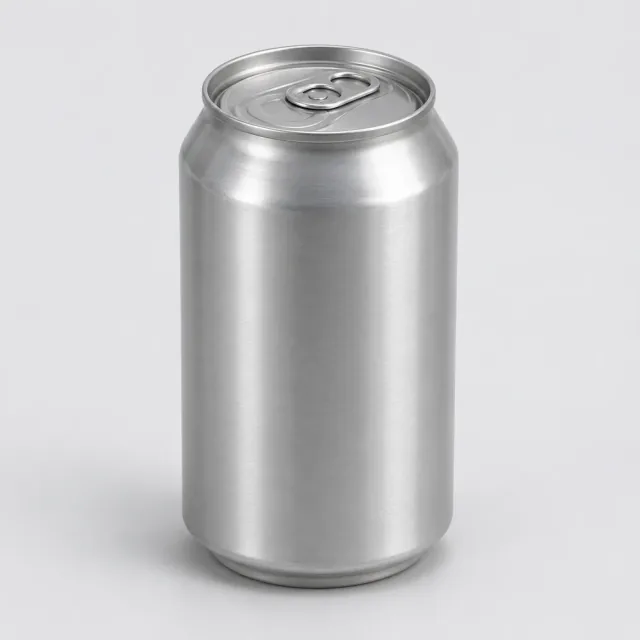
Aluminium food cans, tin-free coated steel and two-piece drawn cans are common alternatives. Internal coatings depend on the food and manufacturer, and not every food can has a pull tab. The package label and condition matter more than the informal name. A can described as steel may still contain tin, polymer coatings and sealing compounds.
What happens after use?
After emptying, follow the local metal-packaging collection rules, including any guidance on lids and residual food. Magnetic separation can help recover steel from mixed materials at appropriate sorting facilities. Recycling melts or otherwise processes metal under controlled conditions; it is not a reason to burn off coatings at home. Reuse for non-food purposes requires care around sharp edges, and a damaged food can should not be repaired for food storage.
Put the choices side by side.
Familiar things, connected.
Follow the evidence
Original explanations informed by the sources below. Technical and industry sources support material behaviour; industry environmental marketing is not treated as a universal comparison. Read our editorial method.
- Tinplate life cycle inventory product description ↗World Steel Association · 2024 · Checked 2026-11-13
- Background on Aluminum Containers ↗The Aluminum Association · Undated · Checked 2026-11-13
- Pots and pans: cookware materials ↗Tefal / Groupe SEB · Undated · Checked 2026-11-13
- What is steel? ↗World Steel Association · Undated · Checked 2026-11-13
- Raw materials ↗World Steel Association · Undated · Checked 2026-11-13
- Tin — element information, properties and uses ↗Royal Society of Chemistry · Undated · Checked 2026-11-13
- Mineral Commodity Summaries 2026 — Tin ↗U.S. Geological Survey, National Minerals Information Center · 2026-05-27 (version 1.3) · Checked 2026-11-13