Paper, polyethylene and foil: why combine them?
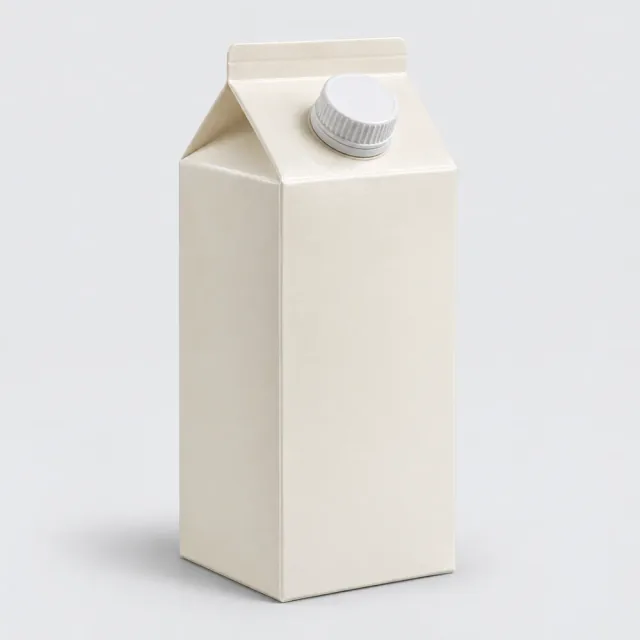
A carton illustrates division of labour. A fibre layer supports the package; thin polymer layers help seal it and resist liquid; some shelf-stable packages add a foil barrier. Refrigerated and shelf-stable cartons need not use the same structure.
On a phone, each design question stacks the material choices for easier reading.
| Design question | Paper & paperboard | LDPE | Aluminium |
|---|---|---|---|
| Main job | Provides stiffness and a printable surface. | Adds liquid resistance and heat-sealable interfaces. | Can provide a very effective light and gas barrier. |
| Used alone | Unprotected fibres absorb water and lose useful stiffness. | A thin flexible film does not provide the same structural stiffness. | Thin foil needs protection and support against mechanical damage. |
| Combination | Carries much of the shape of the finished carton. | Bonds or seals parts of the layered structure. | A small amount can add substantial barrier performance. |
| Recovery | Fibres can be recovered where carton pulping is available. | Recovery of the residual plastic fraction varies by facility. | Recovery with or from the remaining polymer fraction is infrastructure-dependent. |
What changes the answer?
Layers can improve protection while making material separation harder. A package’s effectiveness and its available recovery pathway both belong in the comparison.
Keep following the thread
All objects ↗Familiar things, connected.
Follow the evidence
Original explanations informed by the sources below. Technical and industry sources support material behaviour; industry environmental marketing is not treated as a universal comparison. Read our editorial method.
- About Pulp & Paper ↗Confederation of European Paper Industries · Undated · Checked 2026-11-13
- How Is Paper Made Today? ↗American Forest & Paper Association · 2025-05-01 · Checked 2026-11-13
- Polyethylene (Low Density) LDPE, LLDPE ↗British Plastics Federation · Undated · Checked 2026-11-13
- Plastics Processes ↗British Plastics Federation · Undated · Checked 2026-11-13
- Aluminum Production and Processing ↗The Aluminum Association · Undated · Checked 2026-11-13
- Mineral Commodity Summaries 2026 — Aluminum ↗U.S. Geological Survey, National Minerals Information Center · 2026-05-27 (version 1.3) · Checked 2026-11-13
- Carton packaging materials ↗Tetra Pak · Undated · Checked 2026-11-13
- Tetra Pak cartons: From used to useful again ↗Tetra Pak · Undated · Checked 2026-11-13
- Tinplate life cycle inventory product description ↗World Steel Association · 2024 · Checked 2026-11-13
- Background on Aluminum Containers ↗The Aluminum Association · Undated · Checked 2026-11-13
- Pots and pans: cookware materials ↗Tefal / Groupe SEB · Undated · Checked 2026-11-13