Tennis racket
A stiff frame carries a deliberately flexible string bed.
A tennis racket combines a relatively stiff frame with strings that deform when struck. Modern performance frames described as graphite generally use carbon fibres in a polymer matrix, not a carved piece of the graphite mineral. This representative racket also has protective grommets and a cushioned grip. Frame geometry, string arrangement and tension all influence response, so a material name alone cannot predict how the complete racket will play.
Start with a part, then follow a material. No specialist knowledge needed.
Inside the object
Original conceptual illustration. Numbers open the component index; their positions are illustrative, not a disassembly guide. Equivalent text follows beside the diagram.
1Composite frame
Carbon fibres reinforce a polymer matrix to form a light, stiff frame. Fibre direction and the shape of the hollow structure affect its behaviour. The common marketing word graphite should not be interpreted as evidence that the frame is made from solid mineral graphite.
2String bed
Polyester strings are one established option. They stretch and bend under impact while transferring force into the frame at many holes. String tension, diameter and pattern affect the response, and the polymer label alone does not describe how a strung racket will feel.
3Grommets and head protection
Small polymer sleeves guide strings through holes and reduce direct rubbing against the frame. A protective strip can also cover the exposed head edge. Their polymer grades vary; identifying the function does not justify assigning nylon to every visible plastic grommet.
Composition explained here; no separate material entry in this edition.
4Wrapped grip
A polyurethane-coated textile grip is one documented construction, with polyester and polyamide fibres in its backing. The wrapping improves contact and cushions the handle. It is a replaceable surface layer rather than the principal structural material of the racket's handle.
Why these materials?
The ball does not strike the frame in normal play, but the frame controls the boundary conditions of the string bed. It must hold string tension while limiting unwanted distortion. Grommets protect both the string path and the edges of drilled holes, and the grip provides a manageable interface for the hand. These parts age differently: strings lose useful performance or break, a grip wears, and a damaged composite frame may need replacement rather than another restring. Keeping those failure modes separate helps explain the value of replaceable parts.
One object, many versions.
Recreational rackets may use aluminium alloys or other constructions. Strings include natural gut, nylon-based designs, polyester and combinations of materials. Hybrid stringing uses different strings in the two directions. Some frames include additional fibres, but that does not make a product's marketing list a complete or uniformly distributed bill of materials.
What happens after use?
Replace worn grips and damaged grommets with compatible parts, and have stringing performed within the frame's specified limits. Inspect a frame after a serious impact rather than assuming intact paint means intact reinforcement. Pass on a sound racket when possible. Composite frames and mixed grips generally require specialist routes, while local programmes for used strings remain uneven.
Familiar things, connected.
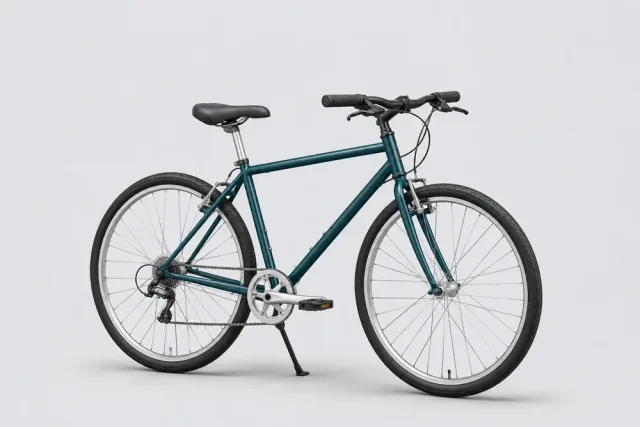
Bicycle
Strength depends on shape as well as substance.
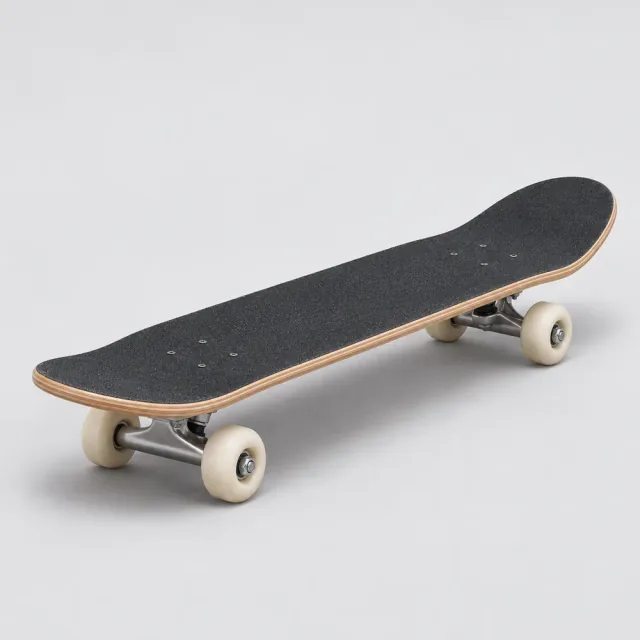
Skateboard
A springy deck above four engineered contact patches.
Football
The outer panels and the air chamber solve different problems.
Follow the evidence
Original explanations informed by the sources below. Technical and industry sources support material behaviour; industry environmental marketing is not treated as a universal comparison. Read our editorial method.
- Pure Drive Gen11 Unstrung ↗Babolat · Undated · Checked 2026-11-14
- Syntec Pro replacement grip ↗Babolat · Undated · Checked 2026-11-14
- Tennis strings ↗Babolat · Undated · Checked 2026-11-14
- US5993337A — Multi-hole grommet for sports racquets ↗Prince Sports Group; patent record via Google Patents · 1999-11-30 · Checked 2026-11-14
- Composite materials: Materials ↗Composites UK · Undated · Checked 2026-11-13
- Plasma Oxidation of Carbon Fiber Precursor ↗U.S. Department of Energy · 2016-06-23 · Checked 2026-11-13
- End of Life and Recycling ↗Composites UK · Undated · Checked 2026-11-13
- Polyesters (Thermoplastic) PETP, PBT, PET ↗British Plastics Federation · Undated · Checked 2026-11-13
- Melt Spinning ↗Textile Exchange · Undated · Checked 2026-11-13
- Microplastics from textiles: towards a circular economy for textiles in Europe ↗European Environment Agency · 2022 · Checked 2026-11-13
- Frequently asked questions on polyurethanes ↗ISOPA / Polyurethanes.org · Undated · Checked 2026-11-13
- The chemistry of polyurethanes ↗Danielle Williams, Lawrence Industries · Undated · Checked 2026-11-13
- Nylons (Polyamide) ↗British Plastics Federation · Undated · Checked 2026-11-13