Food-storage box
A rigid container meets a flexible seal at a carefully shaped edge.
A reusable food-storage box has to contain food, survive cleaning and close repeatedly without losing its fit. This representative clip-lid construction uses polypropylene for the vessel and lid and a silicone gasket at their meeting edge. The clips provide closing force while the gasket accommodates small surface differences. Glass and stainless alternatives change the vessel material without necessarily changing the lid's mixed-material construction.
Start with a part, then follow a material. No specialist knowledge needed.
Inside the object
Original conceptual illustration. Numbers open the component index; their positions are illustrative, not a disassembly guide. Equivalent text follows beside the diagram.
1Container body
Injection-moulded polypropylene can form a light food container with corners, a sealing lip and stacking features. The finished grade and wall design determine its useful temperature and mechanical limits. A resin-identification mark describes the polymer family; it does not independently certify every heating, freezing or cleaning use.
2Lid panel
A polypropylene lid is stiff enough to span the opening while carrying the gasket channel and latch features. Its geometry must match the vessel after repeated washing and temperature changes. A transparent or translucent lid can help identify contents, but clarity alone does not establish the polymer type.
3Perimeter gasket
A silicone-rubber seal compresses between lid and container, filling small gaps that rigid surfaces would leave. The formulation must suit its intended food-contact and temperature conditions. A gasket needs the correct section and fit; simply knowing that it is silicone is not enough to select a replacement.
4Clips and flexible hinges
Closing clips apply force around the lid so the gasket can seal evenly. Some polypropylene designs use thin living hinges moulded as part of the lid; others use separately attached clips. Repeated bending, notch geometry and moulding quality influence their fatigue life, making a small hinge a potentially life-limiting feature.
Why these materials?
A reliable closure requires two contrasting responses. The body and lid must keep a consistent shape, while the seal must deform. Polypropylene can also be deliberately thin at a living hinge, allowing local flexibility within an otherwise rigid part. This explains why one polymer may appear in several functions without behaving identically everywhere. A box's success depends on fit, compression and resistance to repeated use, not just on whether its materials are described as food-safe. Heating permissions also belong to the complete container and lid combination.
One object, many versions.
Glass or stainless vessels may share a polymer clip lid, while simple storage tubs use a flexible press-on lid without a separate gasket. Some products include a vent or a vacuum valve. Oven, microwave, freezer and dishwasher compatibility must be checked separately; a glass base does not make a plastic lid oven-safe.
What happens after use?
Replace compatible gaskets or lids where the manufacturer supplies them, and retire parts that no longer close properly or can no longer be cleaned as intended. A sound box may be reused for other suitable storage. At disposal, separate easily removable pieces if the local collector requests it. Durable food containers and silicone seals are not universally accepted with plastic packaging.
Familiar things, connected.
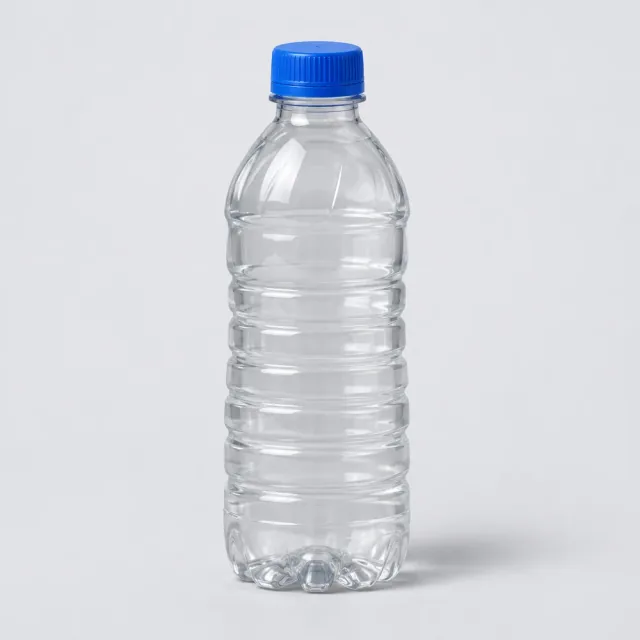
Plastic drink bottle
One polymer for the wall, another for the closure.
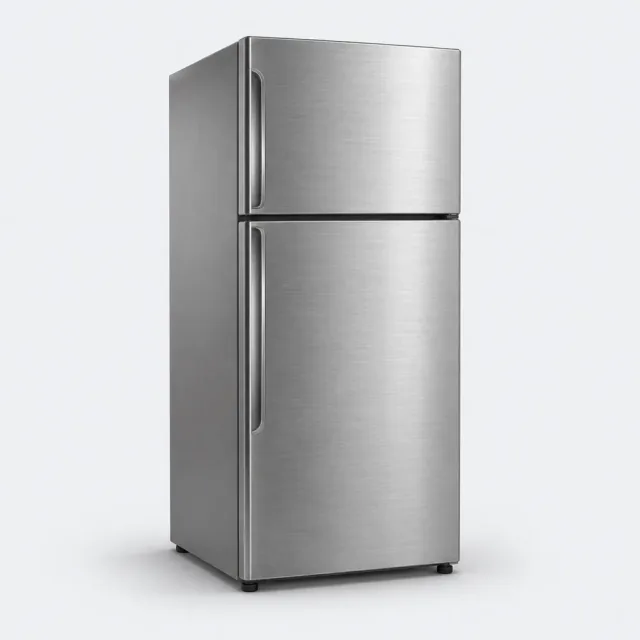
Refrigerator
A machine that moves heat, wrapped in materials that slow its return.
Microwave oven
A metal enclosure that contains waves while a window admits light.
Follow the evidence
Original explanations informed by the sources below. Technical and industry sources support material behaviour; industry environmental marketing is not treated as a universal comparison. Read our editorial method.
- IKEA 365+ food container with lid: square plastic ↗IKEA · Undated · Checked 2026-11-14
- IKEA 365+ food container with lid: rectangular plastic ↗IKEA Indonesia · Undated · Checked 2026-11-14
- Polypropylene (PP) ↗British Plastics Federation · Undated · Checked 2026-11-13
- Plastics Processes ↗British Plastics Federation · Undated · Checked 2026-11-13
- Room Temperature Vulcanizing (RTV) Silicones: Material and Processing Guidelines ↗WACKER Chemie · Undated · Checked 2026-11-13
- Products & Services — Annual Report 2025 ↗WACKER Chemie · 2026 (report for 2025) · Checked 2026-11-13