Polyurethane
Polyurethanes form a broad family rather than one uniform plastic. Different ingredients can produce soft cushion foam, rigid insulation, durable elastomers, coatings and adhesives. A running shoe’s flexible foam and a chair cushion can share this chemistry while having different densities and mechanical behaviour. Some polyurethanes are thermoplastic; many are crosslinked materials that cannot simply be melted into another shape.
Useful properties
Why it earns its placeFrom input to useful material.
A simplified industrial pathway. Select a stage to learn what changes. Recycled feedstock and other process variants can enter at different stages.
Origins & processing
Polyurethanes are commonly made by reacting polyols with isocyanates. The selected ingredients, proportions, catalysts and other additives determine the resulting structure. Blowing processes create cells in a foam, while other formulations form solid elastomers, coatings or adhesives. In many products the polymer forms as the component is made, rather than beginning as a remelted pellet. Thermoplastic polyurethane follows a different processing pattern. Industrial handling of reactive ingredients requires appropriate controls and should not be confused with handling a finished cushion.
Where it turns up
Shoe midsoles, chair cushions and headphone ear pads illustrate cushioning uses. Polyurethane can also appear as an adhesive or a thin coating that is much less visible. Some soft-touch products use different polymer families, so texture alone does not establish composition. A product can contain several polyurethane grades at once.
Useful, with limits.
Foam density, cell structure and chemistry affect support, ageing and compression set. Certain formulations deteriorate with heat, moisture or long storage. Crosslinked foams create recycling challenges, while additives and bonded covers complicate the product further. Softness or a bio-based ingredient does not prove compostability, low emissions or a favourable whole-life comparison.
A next life depends on the system.
Clean foam offcuts can be reused in bonded products, and specialized chemical or mechanical recovery routes exist for selected streams. Household access is uneven, especially for glued shoes and mixed upholstery. Keeping cushions replaceable can extend the host product’s life. Do not assume that a recycling technology described for factory scrap is available for a used shoe locally.
Familiar things, connected.
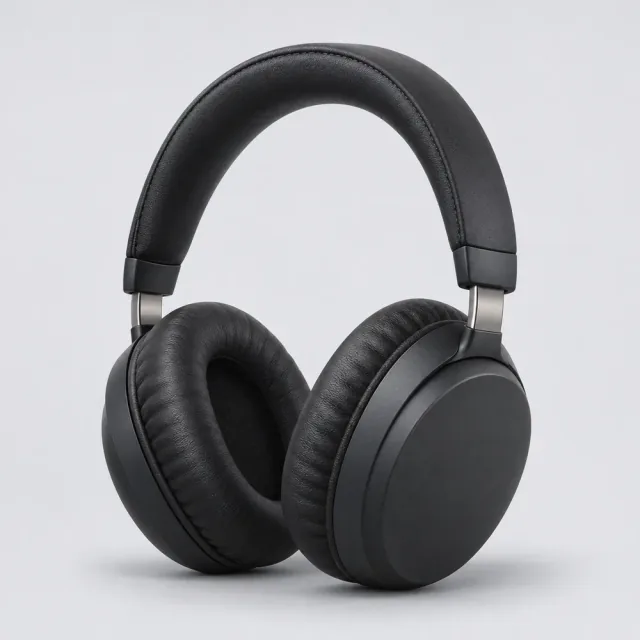
Headphones
A controlled movement becomes sound.
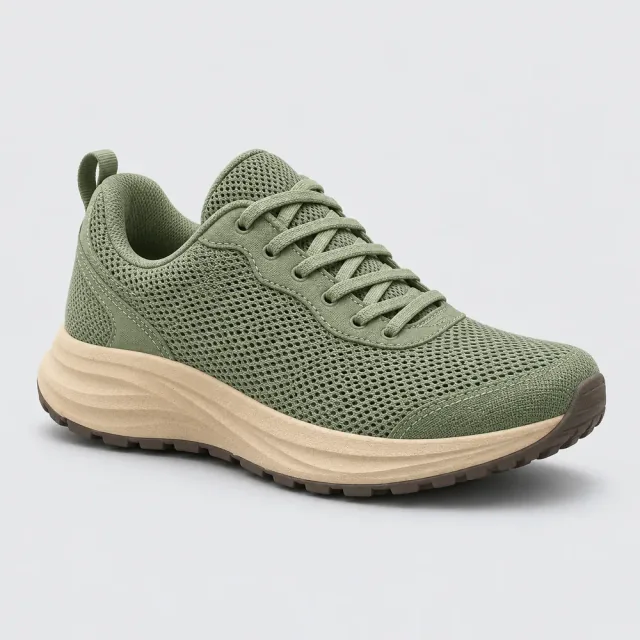
Running shoe
A hard-wearing surface, a soft middle, a flexible shell.
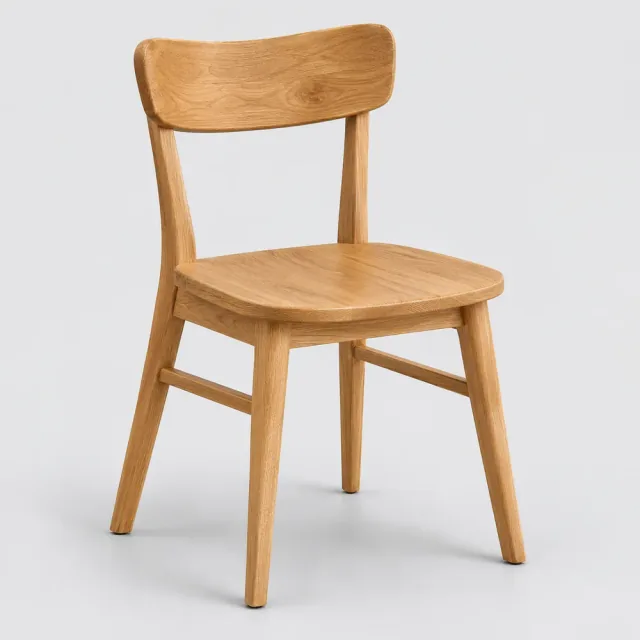
Chair
A frame carries the load; softer layers manage contact.
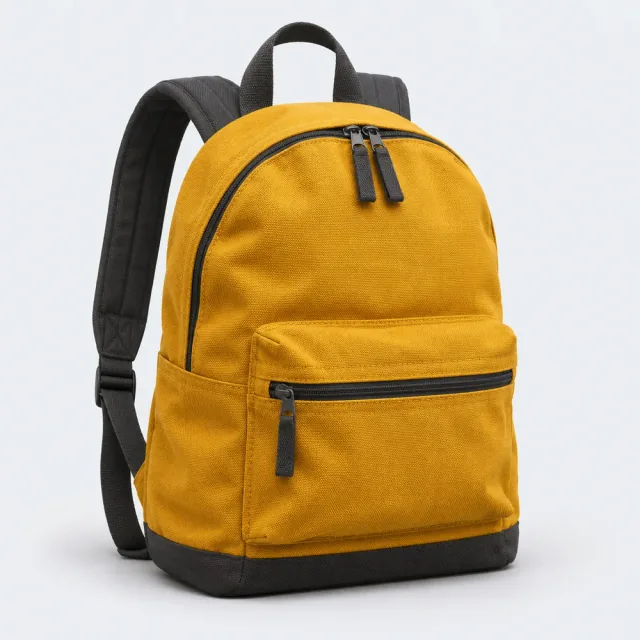
Backpack
A flexible container with a hidden load path.
Follow the evidence
Original explanations informed by the sources below. Technical and industry sources support material behaviour; industry environmental marketing is not treated as a universal comparison. Browse the source register.
- Frequently asked questions on polyurethanes ↗ISOPA / Polyurethanes.org · Undated · Checked 2026-11-13
- The chemistry of polyurethanes ↗Danielle Williams, Lawrence Industries · Undated · Checked 2026-11-13