Polyester fibre
Polyester describes polymers with ester links in their chains. In clothing it usually means PET, the same polymer family used in drinks bottles, shaped into fine fibres instead of a container. Fibre thickness, texture and fabric construction determine whether it becomes a smooth woven cloth or a fluffy fleece. Unsaturated polyester resins used in composites are a different material category and should not be treated as remeltable clothing fibre.
Useful properties
Why it earns its placeFrom input to useful material.
A simplified industrial pathway. Select a stage to learn what changes. Recycled feedstock and other process variants can enter at different stages.
Origins & processing
PET resin is produced from chemical building blocks and then melted for spinning. Fine streams emerge through a spinneret, solidify and are drawn to organize the polymer chains. Filaments may be textured, cut into staple fibres, spun into yarn and woven or knitted. Raising the surface of a fabric creates the pile familiar in fleece. Recycled PET can supply feedstock, but dyes, finishes and blends influence processing. The textile’s final behaviour comes from all these steps, not chemistry alone.
Where it turns up
A fleece jacket and a running-shoe upper can use polyester in quite different fabric structures. Thread, linings and tyre cord provide other functions. PET recovered from bottles may become fibre, but that change is not proof that the resulting textile will be collected and made into another garment.
Useful, with limits.
Polyester can retain oily soils, and fabric feel or warmth depends on construction. Washing and wear can release fibres. Blending it with cotton or elastane may improve a garment’s use performance while making separation harder at end of life. Recycled feedstock is useful information, but does not by itself measure total environmental performance or future recyclability.
A next life depends on the system.
Wear, repair and reuse preserve a garment’s structure. Textile collection may lead to resale, wiping cloths, insulation or other routes, not necessarily fibre-to-fibre recycling. Mechanical and chemical recovery technologies exist for suitable streams, with access and output varying. A bottle-recycling bin is not the right destination for a polyester jacket merely because both may contain PET.
Familiar things, connected.
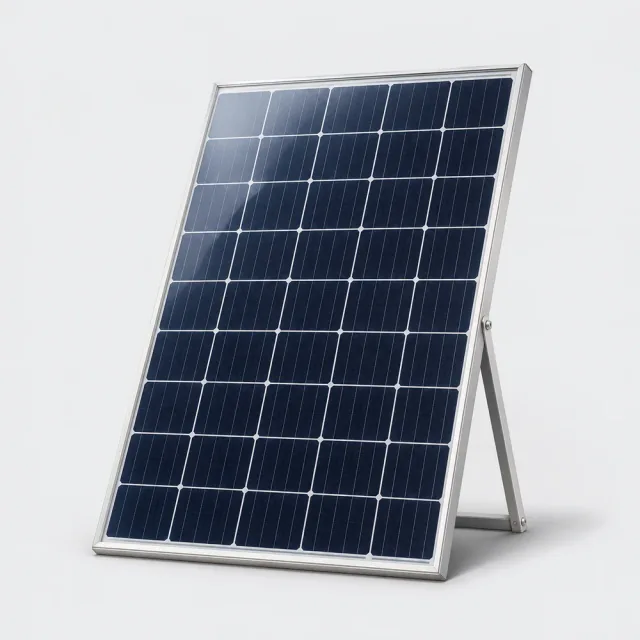
Solar panel
A fragile semiconductor protected for outdoor work.

Headphones
A controlled movement becomes sound.
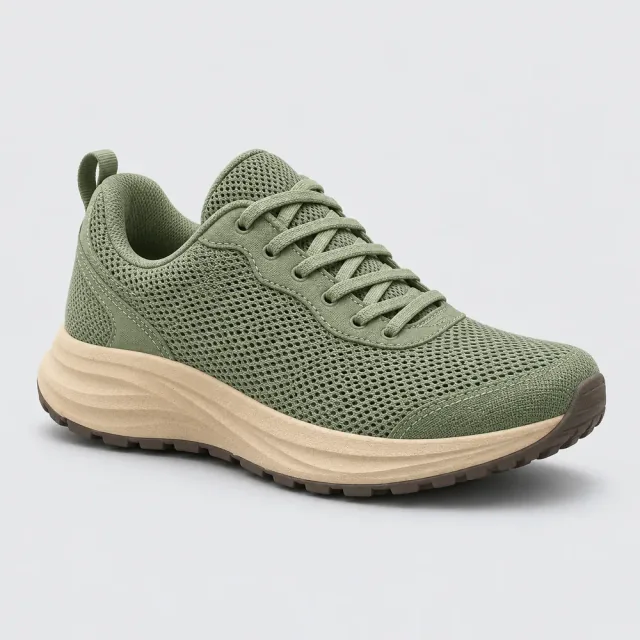
Running shoe
A hard-wearing surface, a soft middle, a flexible shell.
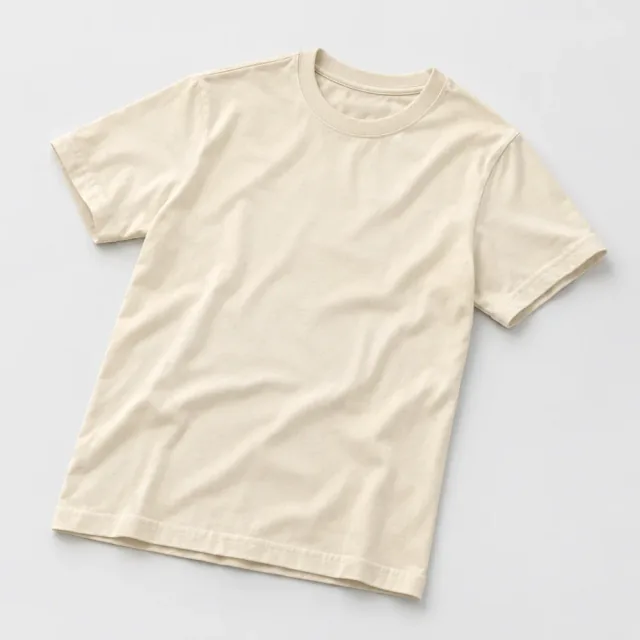
Cotton T-shirt
Plant fibres become yarn, then a flexible looped fabric.
Follow the evidence
Original explanations informed by the sources below. Technical and industry sources support material behaviour; industry environmental marketing is not treated as a universal comparison. Browse the source register.
- Polyesters (Thermoplastic) PETP, PBT, PET ↗British Plastics Federation · Undated · Checked 2026-11-13
- Melt Spinning ↗Textile Exchange · Undated · Checked 2026-11-13
- Microplastics from textiles: towards a circular economy for textiles in Europe ↗European Environment Agency · 2022 · Checked 2026-11-13