Nylon
Nylon is the common name for several synthetic polyamides. Their chains contain amide links, and different chemical building blocks create grades such as nylon 6 and nylon 6,6. Nylon can be spun into fibre, extruded into a bristle or moulded into a mechanical part. Its toughness and wear behaviour explain this variety, while moisture absorption is an important design consideration. Nylon is a family of materials, not one fixed recipe.
Useful properties
Why it earns its placeFrom input to useful material.
A simplified industrial pathway. Select a stage to learn what changes. Recycled feedstock and other process variants can enter at different stages.
Origins & processing
Nylon production joins appropriate chemical building blocks into polyamide chains; the route depends on the nylon type. Resin is carefully conditioned and processed. Melt spinning pushes the polymer through small openings to form filaments, which can be drawn to orient the chains. Moulding produces gears, clips or frames instead. Glass fibres and other ingredients may reinforce engineering grades. These choices mean that a nylon toothbrush bristle, fabric yarn and reinforced mechanical part can behave very differently.
Where it turns up
Toothbrush bristles often use nylon, though alternatives exist. Shoe uppers, textiles and some spectacle-frame grades also use polyamides. Nylon cord can reinforce tyres, while moulded nylon can appear in appliance mechanisms. The function depends on fibre geometry, additives and grade, so the name alone does not predict durability.
Useful, with limits.
Moisture absorption can alter fit and mechanical behaviour. Sunlight, heat and chemicals can also age a particular grade. Nylon’s useful wear resistance does not mean it releases no particles during use. A reinforced moulding is a composite whose properties and recovery needs differ from those of an unfilled textile filament.
A next life depends on the system.
Selected nylon streams can be mechanically or chemically recycled, but consumer objects often contain blends, coatings and tiny inseparable parts. Bristles bonded into a toothbrush are unlike a clean factory offcut. Check specialized collection claims for the exact product. Repair and continued use can preserve the useful structure before fibre or polymer recovery is considered.
Familiar things, connected.

Bicycle
Strength depends on shape as well as substance.
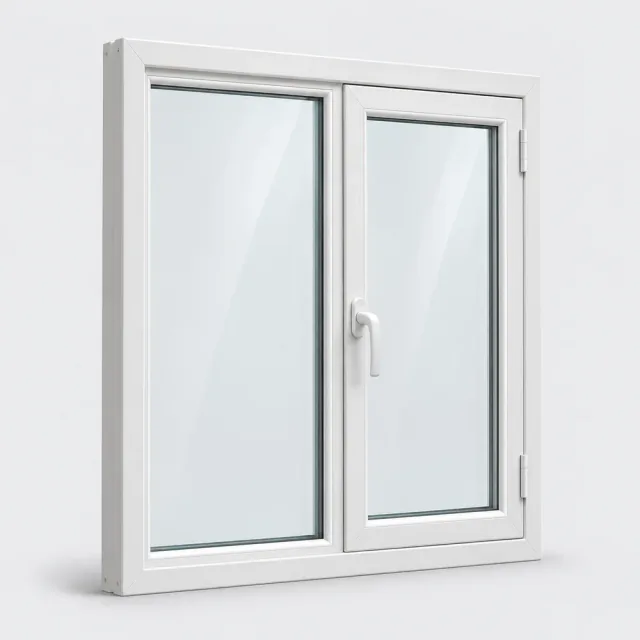
Insulated window
The invisible gaps matter as much as the glass.
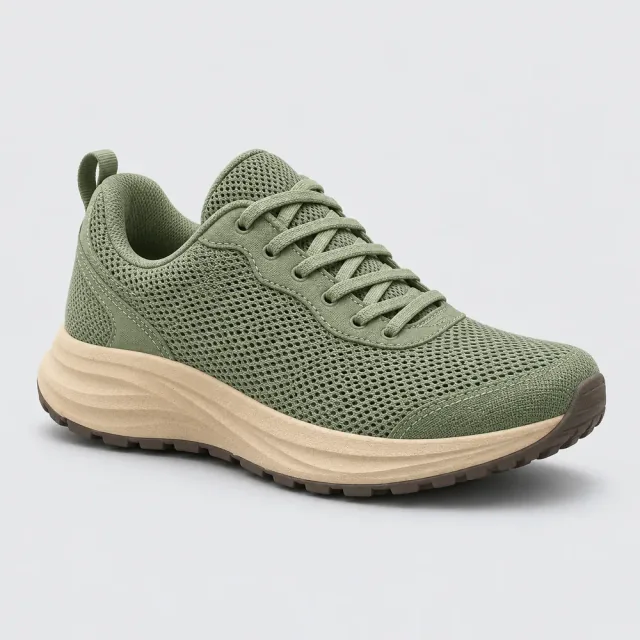
Running shoe
A hard-wearing surface, a soft middle, a flexible shell.
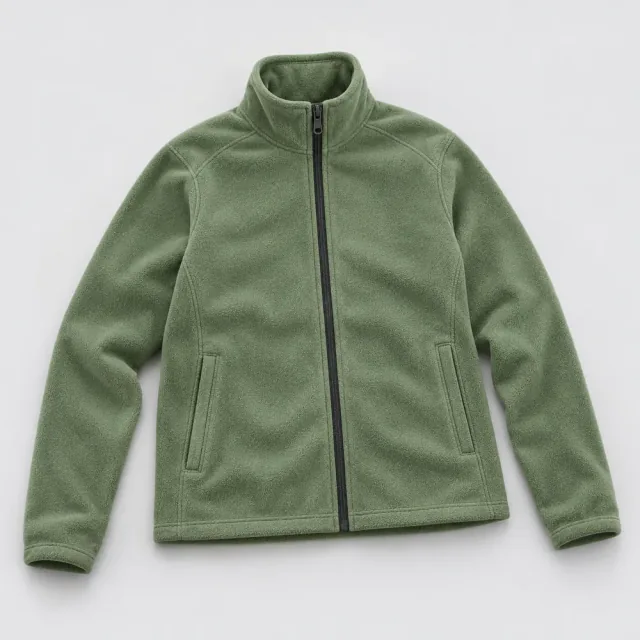
Fleece jacket
A familiar bottle polymer, rearranged into warmth.
Follow the evidence
Original explanations informed by the sources below. Technical and industry sources support material behaviour; industry environmental marketing is not treated as a universal comparison. Browse the source register.
- Nylons (Polyamide) ↗British Plastics Federation · Undated · Checked 2026-11-13
- Melt Spinning ↗Textile Exchange · Undated · Checked 2026-11-13