Zipper
A slider joins many small elements into one flexible closure.
A zipper brings together two rows of elements attached to textile tapes. A moving slider guides the rows into engagement or separates them again. This representative coil zipper uses a continuous polymer filament shaped into interlocking loops, alongside woven tape and metal hardware. Teeth, coils and sliders differ across zipper families, so a shiny or coloured finish is not a reliable guide to their composition.
Start with a part, then follow a material. No specialist knowledge needed.
Inside the object
Original conceptual illustration. Numbers open the component index; their positions are illustrative, not a disassembly guide. Equivalent text follows beside the diagram.
1Textile tapes
Polyester tape is a common support for the zipper elements and provides an area that can be sewn into a garment or bag. Its weave and attachment to the elements help distribute opening loads. Cotton and other tapes exist, so the material of the surrounding garment need not match the zipper tape.
2Interlocking coil
Nylon or polyester monofilament can be formed into a repeating coil that engages with the opposite row. These are alternatives, not a claim that every coil blends both polymers. The shaped filament must combine flexibility with dimensional control so that the slider can guide it repeatedly.
3Slider and pull
A small slider directs the elements along converging or separating paths. Zinc alloys and brass are documented choices for different slider designs. The pull gives a finger purchase and may include locking features; a metallic colour can be a finish rather than evidence of the underlying alloy.
4End stops and joining parts
Stops limit slider travel, while separating zippers add a designed joining arrangement at the bottom. Brass is one possible material for small metal hardware, with other metals and polymers also used. These pieces must match the zipper system, rather than being arbitrary clips that happen to fit the tape.
Why these materials?
The closure gains its flexibility from repetition. Each small element engages locally, allowing the joined chain to bend along the garment or bag. The slider performs the organizing work by controlling how those elements meet, while the textile tape spreads loads into the surrounding fabric. A failure that appears to be one broken zipper can therefore originate in a damaged coil, worn slider, missing stop or torn tape. These are different components with different repair possibilities, and identifying the affected part can preserve a much larger object that still has useful life.
One object, many versions.
Metal zippers use individual metal elements, while moulded-tooth versions can use acetal resin rather than a filament coil. Concealed and water-resistant constructions change how the tape, coil and coatings are arranged. Separating jacket zippers need a bottom joining system that a closed-end pocket does not. Matching dimensions and slider types matters as much as the general material family.
What happens after use?
A clothing or bag repair specialist may replace a matching slider, stop or complete zipper when the surrounding fabric remains sound. Avoid discarding a useful garment solely because its closure needs assessment. A detached zipper is usually a small mixed-material assembly, not a straightforward packaging recyclable. Local textile-reuse and repair routes may be more relevant than attempts to separate every tiny part.
Familiar things, connected.
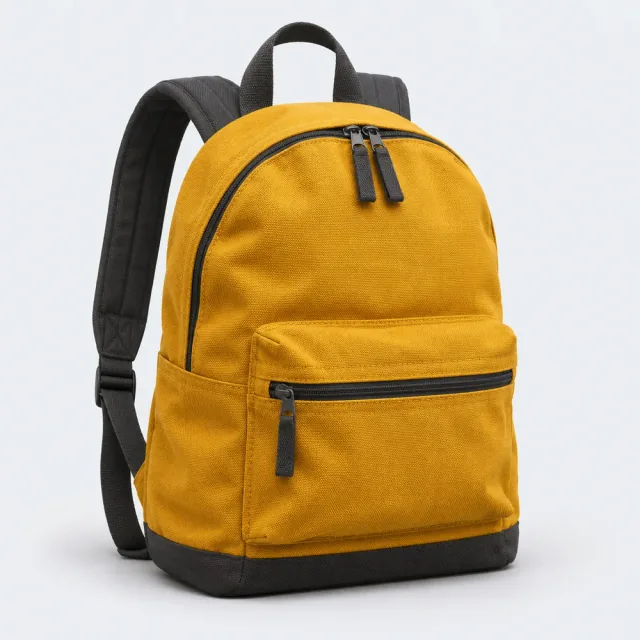
Backpack
A flexible container with a hidden load path.
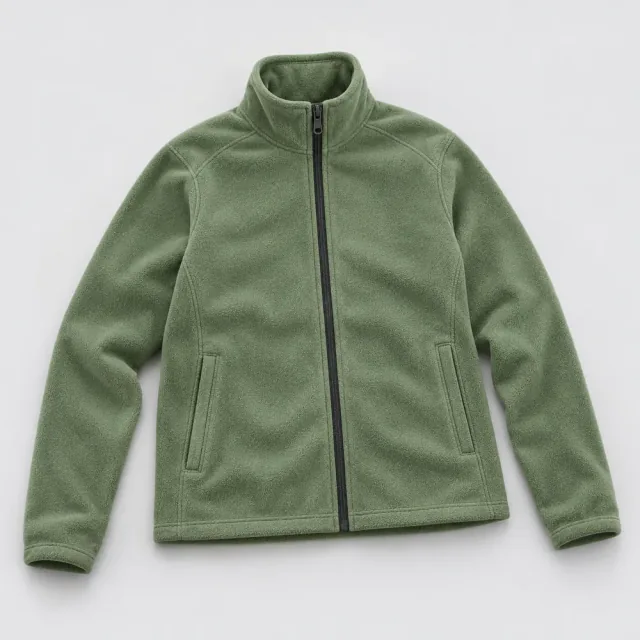
Fleece jacket
A familiar bottle polymer, rearranged into warmth.
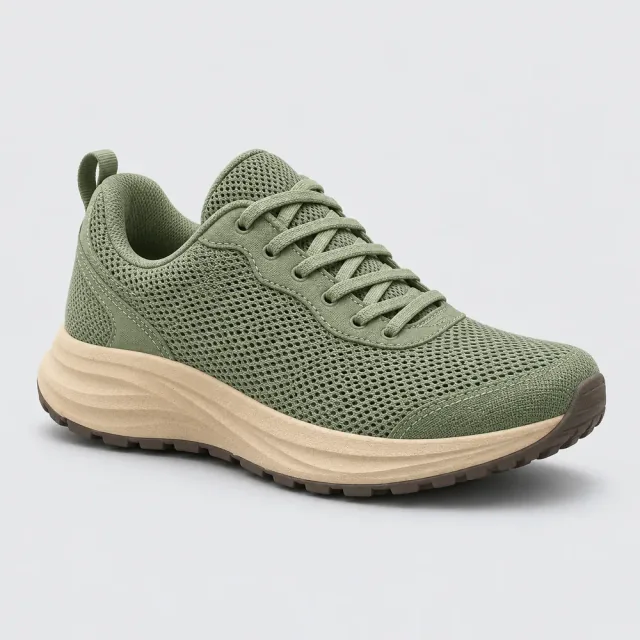
Running shoe
A hard-wearing surface, a soft middle, a flexible shell.
Follow the evidence
Original explanations informed by the sources below. Technical and industry sources support material behaviour; industry environmental marketing is not treated as a universal comparison. Read our editorial method.
- Coil Zipper Standard ↗YKK Americas · Undated · Checked 2026-11-14
- The Structure of a Zipper ↗YKK Americas · Undated · Checked 2026-11-14
- YKK Zipper Usage Instruction Manual ↗YKK · Undated · Checked 2026-11-14
- Polyesters (Thermoplastic) PETP, PBT, PET ↗British Plastics Federation · Undated · Checked 2026-11-13
- Melt Spinning ↗Textile Exchange · Undated · Checked 2026-11-13
- Microplastics from textiles: towards a circular economy for textiles in Europe ↗European Environment Agency · 2022 · Checked 2026-11-13
- Nylons (Polyamide) ↗British Plastics Federation · Undated · Checked 2026-11-13
- Zinc — element information, properties and uses ↗Royal Society of Chemistry · Undated · Checked 2026-11-13
- Mineral Commodity Summaries 2026 — Zinc ↗U.S. Geological Survey, National Minerals Information Center · 2026-05-27 (version 1.3) · Checked 2026-11-13
- Introduction to copper and copper alloys ↗Copper Information Center / International Copper Association · 2021-04-21 · Checked 2026-11-13
- Brasses ↗Copper Information Center / International Copper Association · 2021-04-29 · Checked 2026-11-13
- Preventing and Treating the Dezincification of Brass — CCI Notes 9/13 ↗Canadian Conservation Institute · Undated · Checked 2026-11-13