Towel
Loops put more absorbent fibre where water can reach it.
A cotton terry towel gains its characteristic surface from loops projecting above a woven ground. The loops, supporting cloth and finished edges are different regions of one textile, not a stack of unrelated layers. This example follows a conventional terry bath towel. Its performance depends on yarn, weave, finishing and drying conditions as well as fibre type; a heavier towel is not automatically the best choice for every use.
Start with a part, then follow a material. No specialist knowledge needed.
Inside the object
Original conceptual illustration. Numbers open the component index; their positions are illustrative, not a disassembly guide. Equivalent text follows beside the diagram.
1Absorbent loop pile
Extra yarn forms loops above the ground fabric, presenting a large amount of cotton at the surface. Water can move into spaces between fibres and yarns while cotton itself takes up moisture. Loop height and yarn twist influence handle, durability and drying behaviour.
2Woven ground cloth
The ground holds the pile in place and carries much of the towel's structural load. It needs enough stability to survive washing and handling without making the towel uncomfortably rigid. Pulling a snagged loop can disturb neighbouring yarns rather than neatly remove one isolated fibre.
3Flat end borders
A woven border can finish the towel's ends with a flatter, denser region. It is often decorative as well as structural. Differences in construction and shrinkage can make a border behave differently from the surrounding pile after repeated washing.
4Folded hems and stitching
Folded edges and sewing thread restrain loose cut yarns and reduce fraying. Cotton fabric may be joined with polyester sewing thread, so the edge can differ from the main textile. An early repair to an opening hem can prevent a much larger section from unravelling.
Why these materials?
The towel must balance water uptake with the ability to release that water again during drying. A deep, dense pile gives a plush hand and more material per unit area, but it also makes a heavier wet object. A lighter construction may be more convenient where drying is slow. Finishing treatments can change initial softness and wetting. The woven ground, pile and borders therefore need to work together through many wet-and-dry cycles, rather than merely feel soft on a shop shelf.
One object, many versions.
Terry loops can be left intact or cut to form a velour surface. Waffle towels rely on another woven geometry, while compact travel towels often use synthetic microfibres. Blended towels and decorative borders vary in composition. Grams per square metre describes mass per area, not a complete measure of absorbency or service life.
What happens after use?
Wash and dry according to the label and let the towel dry between uses. Repair loose hems before the ground fabric tears further. A worn but clean towel may become a household cleaning cloth. Confirm requirements before donating to an animal shelter or textile collector; fibre blends, contamination and local facilities affect the available route.
Familiar things, connected.
Bed sheet
A textile surface with a carefully controlled fit.
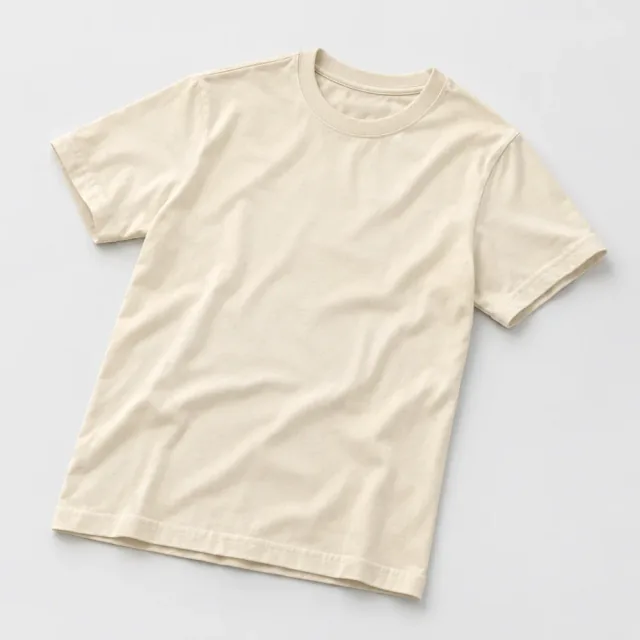
Cotton T-shirt
Plant fibres become yarn, then a flexible looped fabric.
Soap dispenser
A small pump turns a hand movement into controlled liquid flow.
Follow the evidence
Original explanations informed by the sources below. Technical and industry sources support material behaviour; industry environmental marketing is not treated as a universal comparison. Read our editorial method.
- Cotton Home Buyer’s Guide ↗Cotton Incorporated / CottonWorks · Undated · Checked 2026-11-14
- Coats Epic ↗Coats Group · Undated · Checked 2026-11-14
- Textile Fibers ↗Cotton Incorporated · 2013 · Checked 2026-11-13
- Fiber Preparation for Spinning ↗Cotton Incorporated / CottonWorks · Undated · Checked 2026-11-13
- Polyesters (Thermoplastic) PETP, PBT, PET ↗British Plastics Federation · Undated · Checked 2026-11-13
- Melt Spinning ↗Textile Exchange · Undated · Checked 2026-11-13
- Microplastics from textiles: towards a circular economy for textiles in Europe ↗European Environment Agency · 2022 · Checked 2026-11-13