Bicycle helmet
Protection comes from a carefully controlled collapse.
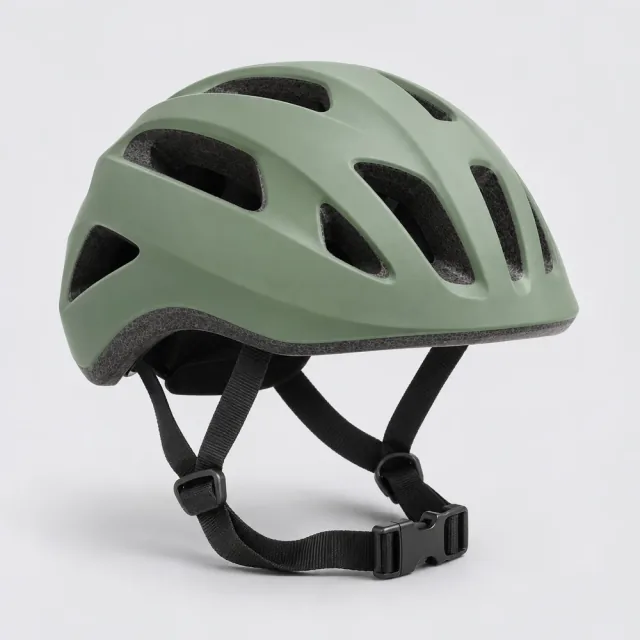
A bicycle helmet is designed to manage impact energy while staying correctly positioned on the head. In a common construction, a thin polycarbonate shell covers a thicker expanded-polystyrene liner, with straps and an adjustment system holding the assembly in place. The foam’s ability to crush is intentional. This material view explains the parts; only testing of the complete helmet to applicable requirements establishes its protective performance.
Start with a part, then follow a material. No specialist knowledge needed.
Inside the object
Original conceptual illustration. Numbers open the component index; their positions are illustrative, not a disassembly guide. Equivalent text follows beside the diagram.
1Outer shell
A thin polycarbonate shell helps distribute local contact and protects the liner during ordinary handling. In some designs it is bonded to the foam during moulding. The shell is not the main thickness of impact-absorbing material, and a smooth-looking exterior does not prove that a helmet has escaped damage.
2Impact liner
Expanded polystyrene consists of fused foam beads with a large gas-filled volume. Under a significant impact its cell structure can crush, increasing stopping distance and dissipating energy. That deformation is not reliably reversible, so returning to an apparently normal shape does not establish that a used liner remains protective.
3Retention straps
Woven polyester or nylon webbing helps keep the helmet in its intended position. Strap placement, stitching and adjustment are part of the complete protective system. Fibre strength alone cannot compensate for loose fitting, an incorrectly routed strap or a damaged attachment to the helmet.
4Buckle and fit cradle
Moulded acetal buckles and nylon fit-system parts are examples of compact polymer hardware. They need to combine controlled movement with secure retention. Their exact polymers differ among models, and the small adjustment cradle does not replace the chin strap or make an incorrectly sized helmet suitable.
5Comfort pads
Thin polyurethane foam and textile pads can improve comfort and manage contact with the scalp. They are distinct from the much thicker impact liner. Removable pads may have specific washing instructions, and their softness should not be mistaken for a measure of the helmet’s impact performance.
Why these materials?
A helmet is a good example of a useful failure mechanism. A rigid object might survive an impact while transmitting a large force; the foam is deliberately allowed to collapse so that the head slows over a longer distance. Designers must balance liner thickness, coverage, ventilation, shell support and fit. Openings reduce mass and improve airflow but also shape the remaining structure. Additional sliding systems appear in some helmets, yet material lists cannot rank their performance. The tested assembly, appropriate certification for the activity, correct fitting and replacement guidance remain the relevant basis for use.
One object, many versions.
Some helmets have thicker ABS shells, while others use different foams or additional structures. Road, commuter and mountain-bike models differ in coverage and ventilation. A helmet designed for another sport is not automatically suitable for cycling. Safety requirements and certification marks vary by country, so the applicable local standard and manufacturer’s intended use should be checked.
What happens after use?
Follow the manufacturer’s replacement guidance after an impact and when damage or ageing makes continued use uncertain. Do not sell a helmet with an unknown or compromised impact history as protective equipment. Paint, solvents, heat and unauthorized modifications can affect its parts. Recycling is difficult because bonded foam, shell and straps are mixed; use a collection program only if it specifically accepts helmets.
Familiar things, connected.
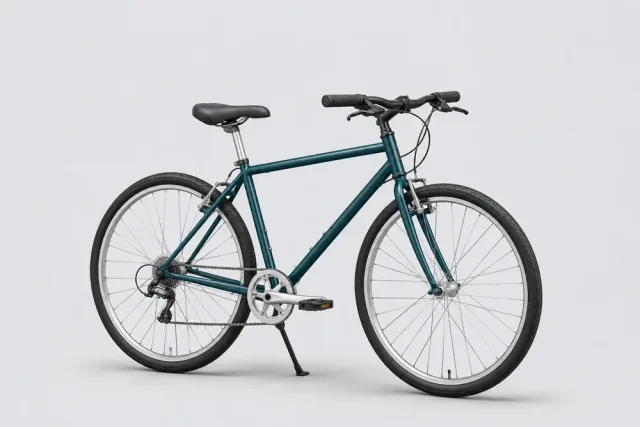
Bicycle
Strength depends on shape as well as substance.
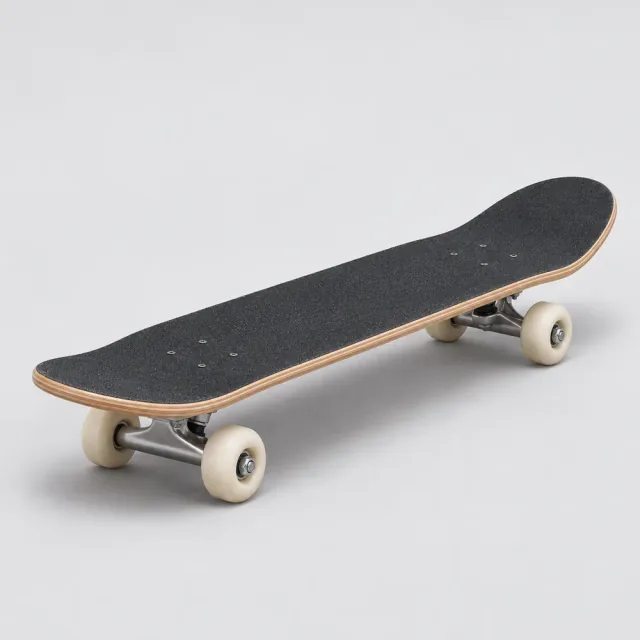
Skateboard
A springy deck above four engineered contact patches.
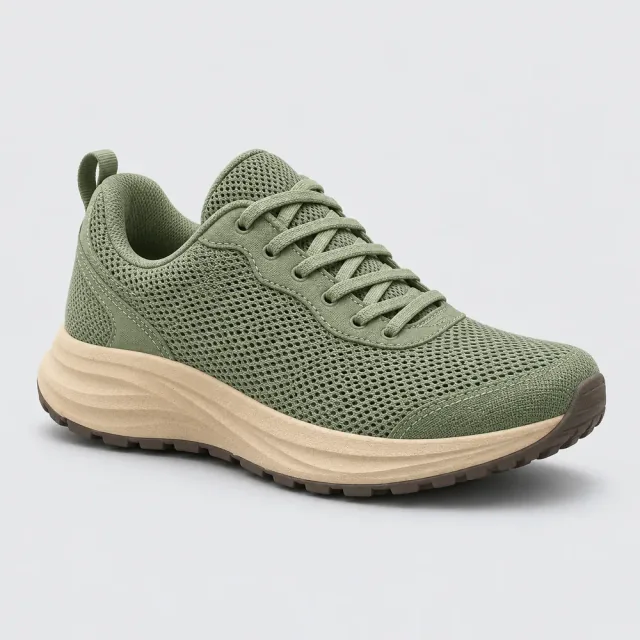
Running shoe
A hard-wearing surface, a soft middle, a flexible shell.
Follow the evidence
Original explanations informed by the sources below. Technical and industry sources support material behaviour; industry environmental marketing is not treated as a universal comparison. Read our editorial method.
- 2Twenty Mips: construction and materials ↗Bell Helmets · Undated · Checked 2026-11-13
- How bicycle helmets are made ↗Bicycle Helmet Safety Institute · Undated · Checked 2026-11-13
- Bicycle Helmets: Business Guidance ↗U.S. Consumer Product Safety Commission · Undated · Checked 2026-11-13
- Polycarbonate (PC) ↗British Plastics Federation · Undated · Checked 2026-11-13
- Plastics Processes ↗British Plastics Federation · Undated · Checked 2026-11-13
- Polystyrene ↗INEOS · Undated · Checked 2026-11-13
- Expanded and Extruded Polystyrene (EPS/XPS) ↗British Plastics Federation · Undated · Checked 2026-11-13
- Plastics Processes ↗British Plastics Federation · Undated · Checked 2026-11-13
- Polyesters (Thermoplastic) PETP, PBT, PET ↗British Plastics Federation · Undated · Checked 2026-11-13
- Melt Spinning ↗Textile Exchange · Undated · Checked 2026-11-13
- Microplastics from textiles: towards a circular economy for textiles in Europe ↗European Environment Agency · 2022 · Checked 2026-11-13
- Nylons (Polyamide) ↗British Plastics Federation · Undated · Checked 2026-11-13
- Polyacetals POM ↗British Plastics Federation · Undated · Checked 2026-11-13
- Ultraform (POM) — Polyoxymethylene solutions ↗BASF · Undated · Checked 2026-11-13
- Frequently asked questions on polyurethanes ↗ISOPA / Polyurethanes.org · Undated · Checked 2026-11-13
- The chemistry of polyurethanes ↗Danielle Williams, Lawrence Industries · Undated · Checked 2026-11-13