PVC
PVC is a chlorine-containing polymer whose finished behaviour depends strongly on its formulation. Rigid formulations appear in window frames and pipes; plasticized formulations can bend into cable coverings and flexible sheet. The contrast is not a contradiction: additives are an intentional part of the material design. Calling an object PVC identifies the base polymer but does not reveal all its stabilizers, plasticizers, fillers or pigments.
Useful properties
Why it earns its placeFrom input to useful material.
A simplified industrial pathway. Select a stage to learn what changes. Recycled feedstock and other process variants can enter at different stages.
Origins & processing
PVC production uses vinyl chloride monomer, made through an industrial chain involving chlorine and hydrocarbon feedstocks. Chlorine commonly originates from salt electrolysis. Polymerization creates PVC resin, which is compounded with ingredients needed for processing and service. Extrusion produces long window profiles or cable coverings; other techniques make sheet and moulded parts. The finished formulation matters throughout the chain. Chlorine in the polymer is chemically bound and should not be confused with a container of chlorine gas.
Where it turns up
A window can pair rigid PVC frame profiles with glass and seals. A cable can pair flexible PVC insulation with a copper conductor. These products ask different questions of the material: dimensional stability and weathering for one, flexibility and electrical separation for the other. They also create different collection and separation problems.
Useful, with limits.
Formulations differ by age, application and market, so old additives may complicate reuse or recycling. PVC needs controlled processing and can release harmful products when burned improperly. Flexible and rigid grades should not be treated as interchangeable. Durability claims depend on exposure, installation and maintenance rather than the polymer name alone.
A next life depends on the system.
Specialist systems can recover PVC from selected building products and cables. Household packaging collection is not a universal route for these items. Sorting by application and managing legacy additives are important to the quality of recycled material. Reuse or replacement decisions for installed components also need the condition of seals, joints and the complete assembly.
Familiar things, connected.

Headphones
A controlled movement becomes sound.
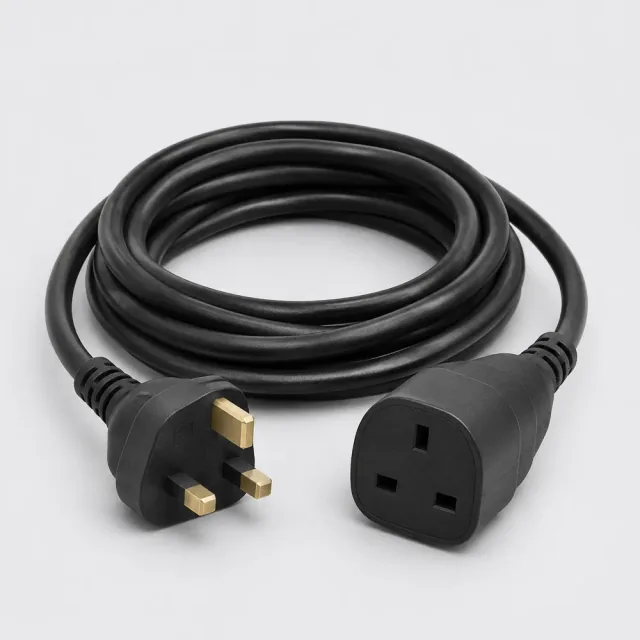
Electric cable
A conductor is useful only when its current stays on the intended path.

Refrigerator
A machine that moves heat, wrapped in materials that slow its return.
Computer mouse
A small camera turns surface texture into movement.
Follow the evidence
Original explanations informed by the sources below. Technical and industry sources support material behaviour; industry environmental marketing is not treated as a universal comparison. Read our editorial method.
- Polyvinyl Chloride PVC ↗British Plastics Federation · Undated · Checked 2026-11-13
- Plastics Processes ↗British Plastics Federation · Undated · Checked 2026-11-13