Nickel
Nickel often matters most when mixed with other elements. It is used in many stainless steels and in heat-resistant alloys, and nickel compounds are ingredients in some rechargeable-battery electrodes. Those are different material roles: a battery does not contain a simple slab of nickel doing the work of a steel alloy. Nickel-free stainless grades and nickel-free lithium-ion chemistries also exist, so neither label is proof of its presence.
Useful properties
Why it earns its placeFrom input to useful material.
A simplified industrial pathway. Select a stage to learn what changes. Recycled feedstock and other process variants can enter at different stages.
Origins & processing
Nickel is extracted from sulfide ores and lateritic deposits using different routes. Some production is directed into alloy feedstocks, while other processing produces refined metal or chemicals suitable for batteries. These outputs are not automatically interchangeable without further treatment. Smelting, leaching and purification can occur far from a mine. Stainless-steel scrap is also a source of nickel that may be reused within an alloy loop. Tracking nickel therefore requires both the extraction route and the intended product specification.
Where it turns up
Nickel may appear in a saucepan alloy, a battery cathode or a heating-element alloy. Its contribution depends on the chemical form and the surrounding material. A washing-machine drum may use a nickel-containing stainless grade, but grade choice varies. The atlas shows representative routes rather than asserting that all appliances contain nickel.
Useful, with limits.
Mining and processing impacts vary with ore and plant design. Nickel can also cause contact allergy in some people; bulk composition alone does not establish how much a finished surface releases. Battery performance cannot be predicted from nickel content alone, because electrode design, electrolyte, controls and operating conditions all matter.
A next life depends on the system.
Nickel in stainless scrap can remain valuable as an alloy ingredient. Batteries require dedicated collection and controlled industrial treatment; their hazards do not disappear when they stop powering a device. Recovery efficiency differs among processes and chemical forms. A nickel-recovery claim should specify the material stream rather than treating every nickel-containing product as equivalent.
Familiar things, connected.
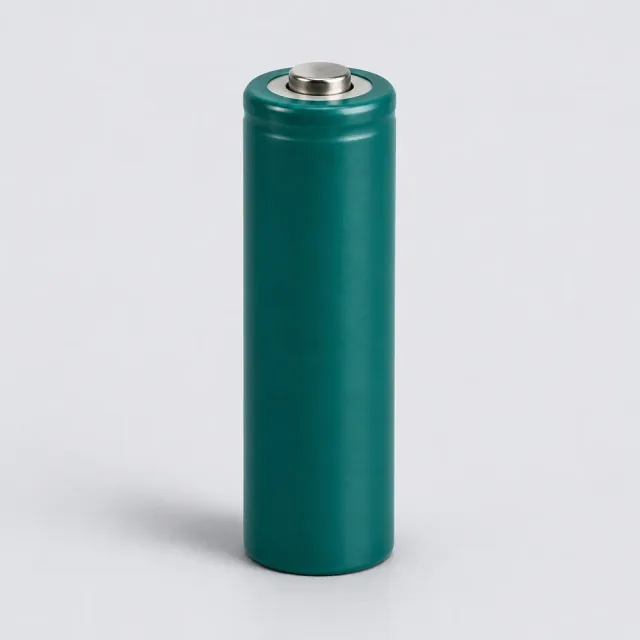
Lithium-ion battery
Ions travel inside; electrons take the useful outside route.
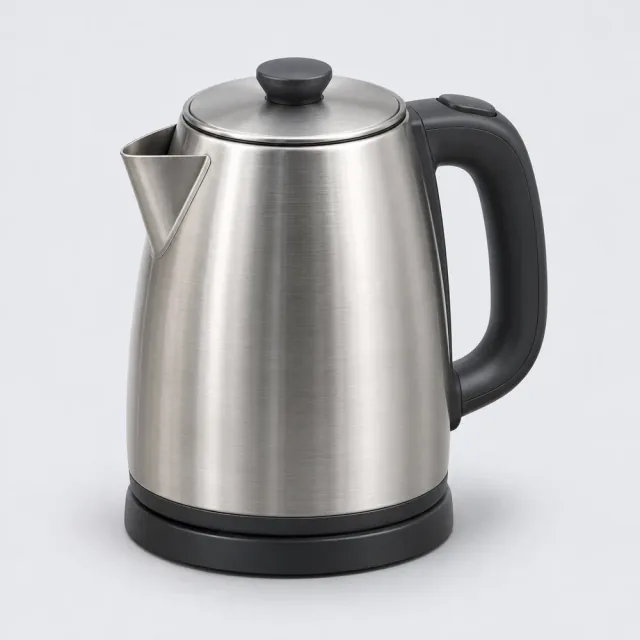
Electric kettle
Heat where it is useful, insulation where it is held.

House keys
A small metal profile carries a mechanical code.
Remote control
A soft button can close a circuit that sends invisible light.
Follow the evidence
Original explanations informed by the sources below. Technical and industry sources support material behaviour; industry environmental marketing is not treated as a universal comparison. Browse the source register.
- Nickel — element information, properties and uses ↗Royal Society of Chemistry · Undated · Checked 2026-11-13
- Mineral Commodity Summaries 2026 — Nickel ↗U.S. Geological Survey, National Minerals Information Center · 2026-05-27 (version 1.3) · Checked 2026-11-13
- How Do I Recycle Common Recyclables ↗U.S. Environmental Protection Agency · Undated · Checked 2026-11-13