Concrete
Concrete combines aggregate with a cement-based paste that hardens through chemical reactions with water. It is therefore different from the cement powder sold in a bag. The hardened composite is useful in compression and can be cast or pressed into many shapes, while steel or other reinforcement may help carry tension. Its mix, curing and component geometry matter: a dense block, a lightweight block and a reinforced slab are not interchangeable versions of one recipe.
Useful properties
Why it earns its placeCompression and cracking ↗
Concrete carries compressive loads well, while tensile cracking often drives the need for reinforcement and careful detailing.
Shape before hardening ↗
A workable fresh mix can fill a mould; drier block mixes use vibration and compaction to establish their shape.
Mass depends on aggregate ↗
Aggregate type and voids influence density. Thermal mass is useful in some designs but is not the same as thermal insulation.
From input to useful material.
A simplified industrial pathway. Select a stage to learn what changes. Recycled feedstock and other process variants can enter at different stages.
Origins & processing
Production brings together a specified cementitious binder, water and graded aggregates, sometimes with additional mineral materials, admixtures or fibres. Controlling the proportions and aggregate moisture helps create a predictable fresh mix. Concrete is mixed, placed or moulded, and compacted to limit unwanted voids. Curing maintains conditions that allow hydration and strength development; simply drying the surface is not the goal. Factory-made products can then be demoulded and checked, while cast-in-place concrete develops within its installed formwork and surroundings.
Where it turns up
Concrete is used in blocks, foundations, floors, bridges and precast components. Some washing machines use concrete counterweights, where mass serves a different purpose from a building’s load-bearing structure. A ceramic-tile floor may sit over a concrete substrate, with adhesive and movement details between them. The visible surface alone does not disclose the complete assembly.
Useful, with limits.
Shrinkage, restraint, loading and temperature changes can cause cracks. Water, salts, freezing conditions or chemical exposure may damage unsuitable mixes or their reinforcement over time. Cement manufacture contributes emissions through both mineral reactions and energy use. Good performance therefore depends on the full design, mix and curing practice; adding more cement is not a universal solution to durability or environmental impact.
A next life depends on the system.
Sound structures can often be maintained or adapted, preserving more value than immediate demolition. Removed concrete can be crushed and graded for approved aggregate uses, with reinforcement recovered separately. Attached gypsum, salts and other contamination can limit those routes. Crushing does not reverse cement hydration into a fresh bag of cement, and using recycled aggregate still requires a mix designed for its properties.
Familiar things, connected.
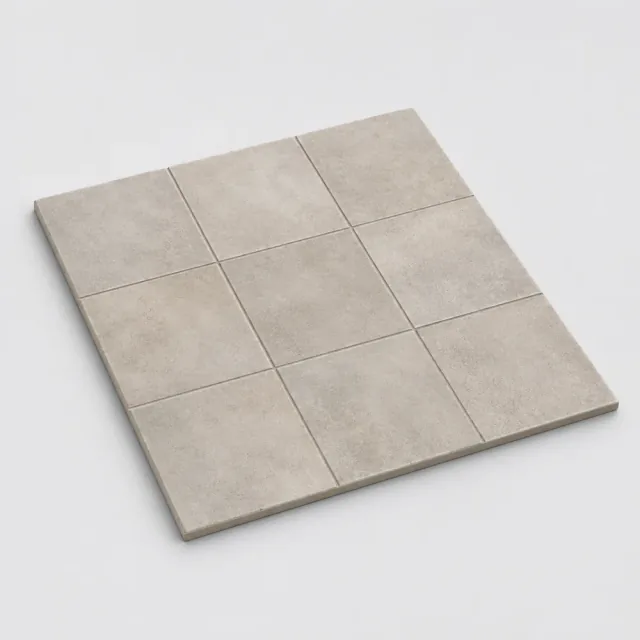
Ceramic tile floor
A hard surface relies on the layers beneath it.
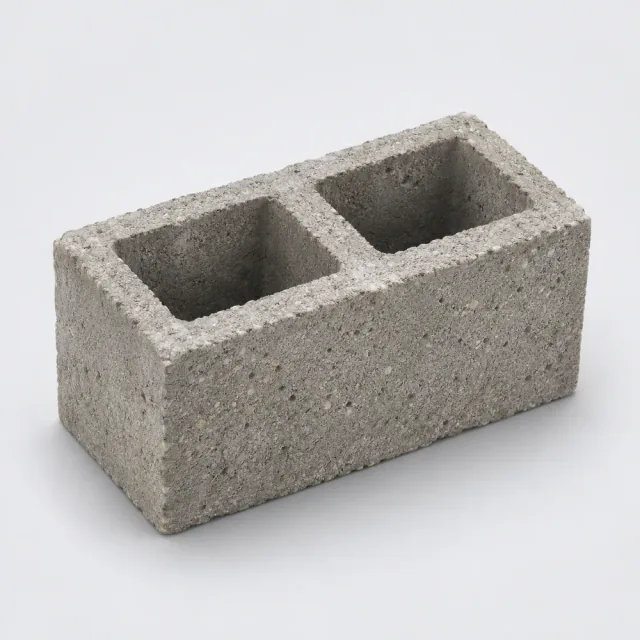
Concrete block
A shaped mineral composite with strength in both its material and geometry.

Washing machine
A wet working chamber inside a structural and electrical system.
Follow the evidence
Original explanations informed by the sources below. Technical and industry sources support material behaviour; industry environmental marketing is not treated as a universal comparison. Browse the source register.
- Explained: Cement vs. concrete — their differences, and opportunities for sustainability ↗MIT Concrete Sustainability Hub; Andrew Logan · 2020-04-03 · Checked 2026-11-13
- Cement & Concrete FAQ ↗American Cement Association · Undated · Checked 2026-11-13
- Sustainable Management of Construction and Demolition Materials ↗U.S. Environmental Protection Agency · Undated · Checked 2026-11-13