Calcium carbonate
Calcium carbonate is a compound found in limestone, chalk and marble, as well as in shells. Industry uses carefully prepared grades as fillers, coating ingredients and abrasives. In toothpaste, particle properties are controlled to help clean surfaces; the material is not simply crushed garden rock added to a tube. In paper, it can influence brightness, opacity and smoothness. Its function depends on particle size, shape, purity and the surrounding formulation.
Useful properties
Why it earns its placeFrom input to useful material.
A simplified industrial pathway. Select a stage to learn what changes. Recycled feedstock and other process variants can enter at different stages.
Origins & processing
Ground calcium carbonate comes from suitable mineral deposits that are quarried, cleaned, crushed and milled. Precipitated calcium carbonate follows a chemical route that allows controlled crystal formation. Producers select purity and particle characteristics for applications such as paper, plastics or oral care. These grades are not interchangeable. Heating calcium carbonate sufficiently can make lime and release carbon dioxide, but that is a different industrial pathway from simply grinding the mineral. The processing route therefore matters when comparing material impacts.
Where it turns up
Toothpaste can use calcium carbonate as an abrasive, while other formulas use silica-based systems. Paper may contain it as a filler or coating ingredient, and plastics can include it to alter properties and processing. These small dispersed particles link familiar objects without making the finished objects chemically or functionally equivalent.
Useful, with limits.
An abrasive’s performance is a property of the complete formulation and particle specification, not just its chemical name. Calcium carbonate reacts with acids, and impurities may limit suitable uses. Industrial powders should not be treated as food or oral-care ingredients. The atlas explains the ingredient role and provides no instructions for making toothpaste.
A next life depends on the system.
Calcium carbonate dispersed through toothpaste is not practically recovered as a separate household material. In paper or plastic it enters the host product’s waste stream, potentially influencing recycling residues and output quality. A naturally occurring ingredient does not make the whole product compostable or harmless in any environment. Follow the disposal route for the finished product.
Familiar things, connected.

Toothpaste and tube
A formulation and its container solve different problems.
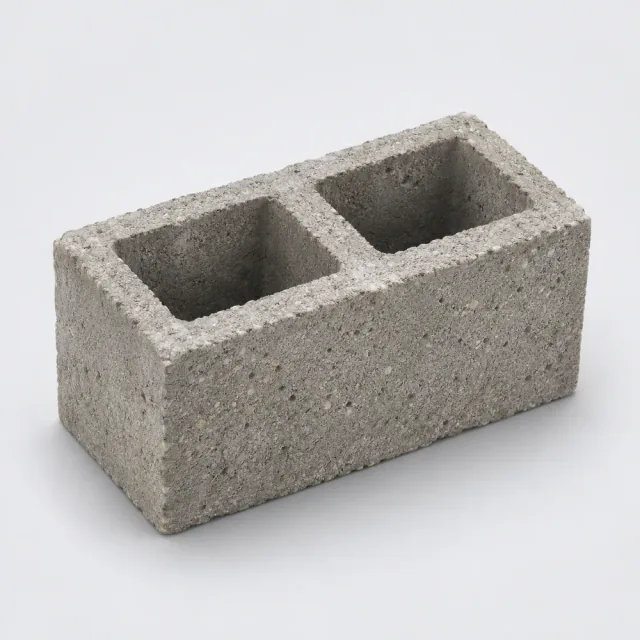
Concrete block
A shaped mineral composite with strength in both its material and geometry.
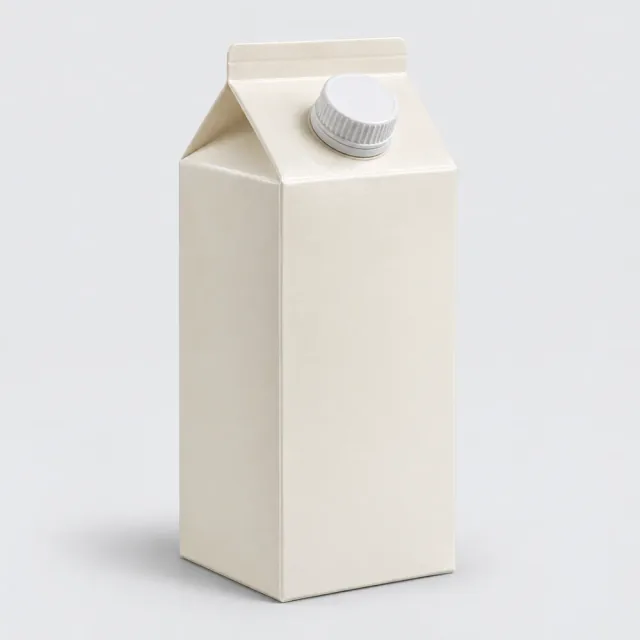
Milk carton
Paper supplies stiffness; very thin layers supply barriers.
Follow the evidence
Original explanations informed by the sources below. Technical and industry sources support material behaviour; industry environmental marketing is not treated as a universal comparison. Browse the source register.
- Our Minerals ↗Omya · Undated · Checked 2026-11-13
- Oral Care Portfolio — Natural Calcium Carbonates ↗Omya · 2025 · Checked 2026-11-13