Bamboo
Bamboo is a grass, although many species produce woody stems called culms. Fibres distributed through the culm wall give it useful directional strength, while the hollow geometry of many culms offers a ready-made structural form. A round bamboo pole differs from a laminated bamboo board or a resin-bonded composite. Regenerated cellulose fabric marketed as bamboo also follows a chemical transformation and should not be confused with an intact strip of the plant.
Useful properties
Why it earns its placeStrength with a direction ↗
Fibre alignment supports loads along the culm; joints, defects and loading across the fibres need separate consideration.
Strips and laminates ↗
Splitting, planing and bonding turn curved culms into flat or shaped products, adding manufacturing choices and adhesive interfaces.
Moisture-sensitive plant structure ↗
Water uptake and drying affect dimensions and durability; treatments and product design govern suitability for exposure.
From input to useful material.
A simplified industrial pathway. Select a stage to learn what changes. Recycled feedstock and other process variants can enter at different stages.
Origins & processing
Bamboo culms are harvested according to species, maturity and the intended product. Preparation removes branches and divides the culm into usable lengths. For laminated products, manufacturers split and plane the wall into strips, then dry, grade and treat them as required. Adhesive and pressure bind selected strips into blanks that can be machined into components. Other routes retain round culms or use bundles and particles. These changes in geometry, treatment and bonding explain why the label bamboo covers products with quite different performance.
Where it turns up
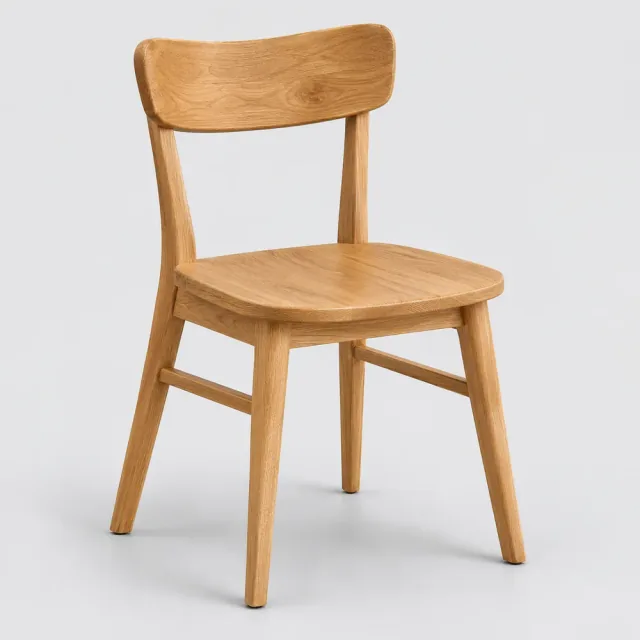
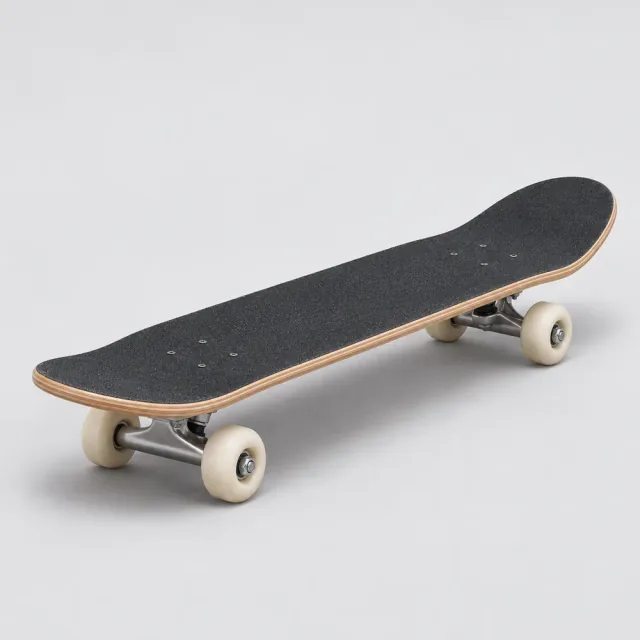
Bamboo is used for furniture, flooring, household utensils and selected toothbrush handles. A bamboo chair may retain round stems or use engineered laminates. Some boards and sporting goods combine bamboo with other woods or fibres. In a toothbrush, the handle’s plant origin does not establish the material of the bristles, adhesive or other small components.
Useful, with limits.
Species, culm age, position and processing create substantial variability. Untreated material can be vulnerable to moisture, fungi and insects, and joints can govern structural failure. A rapid growth rate alone does not establish a product’s environmental impact: land management, treatment, adhesive, drying energy and transport also matter. Engineered bamboo should be assessed as its particular composite rather than assumed to behave like a raw pole.
A next life depends on the system.
Repair and reuse can preserve useful bamboo furniture or components. Untreated, uncontaminated plant material has different recovery options from a painted or resin-bonded board. Adhesives and preservatives may prevent ordinary composting, and small mixed products require separation of their non-bamboo parts. Specialist wood or construction recovery may accept some products, but bamboo branding does not guarantee that a local service can process them.
Familiar things, connected.

Follow the evidence
Original explanations informed by the sources below. Technical and industry sources support material behaviour; industry environmental marketing is not treated as a universal comparison. Read our editorial method.
- Transfer of Technology Model: The Bamboo Furniture Making Unit ↗International Network for Bamboo and Rattan / Nanjing Forestry University · Undated · Checked 2026-11-13
- Effect of processing methods on the mechanical properties of engineered bamboo ↗Bhavna Sharma, Ana Gatóo and Michael H. Ramage; University of Cambridge repository · 2015 · Checked 2026-11-13
- PH leads international standardization of laminated bamboo strips for indoor furniture use ↗Philippines Department of Trade and Industry, Bureau of Philippine Standards · 2021-09-13 · Checked 2026-11-13