Desk lamp
Light arms reach outward; a heavy base makes that reach possible.
An adjustable desk lamp positions a light source where it is needed without moving the entire workspace. A balanced-arm example combines an aluminium shade and arms with steel springs, joints and a heavy base. Its electrical parts have a different job from its moving structure. This representative construction follows a familiar spring-balanced lamp family, while fixed-neck and integrated-LED lamps may use very different arrangements.
Start with a part, then follow a material. No specialist knowledge needed.
Inside the object
Original conceptual illustration. Numbers open the component index; their positions are illustrative, not a disassembly guide. Equivalent text follows beside the diagram.
1Shade and reflector
A formed aluminium shade is light enough to reposition and stiff enough to hold its shape around the light source. Its inner finish controls reflection, while ventilation and clearance help manage temperature. The reflector's colour or coating is a separate optical surface, not evidence of a different bulk metal.
2Arms, springs and joints
Light aluminium arms reduce the torque that the balancing system must counteract. Steel springs store elastic energy and help hold the chosen position, while joints guide movement. Their dimensions, attachments and friction matter as much as the metal families, especially as the lamp reaches farther from its base.
3Weighted base
A cast-iron base places substantial mass near the desk, resisting the overturning effect of the extended arm. An aluminium cover can provide the visible finish without supplying most of that ballast. This is a useful case where adding mass is an intentional design advantage rather than wasted material.
4Lamp holder, light source and cable
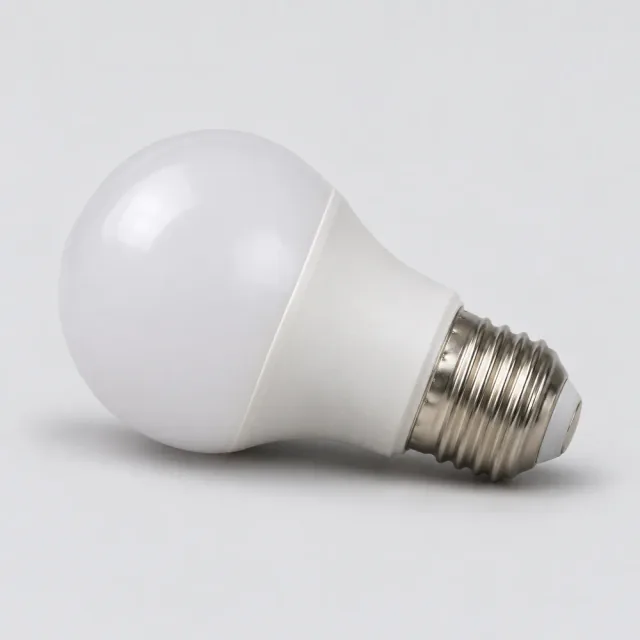
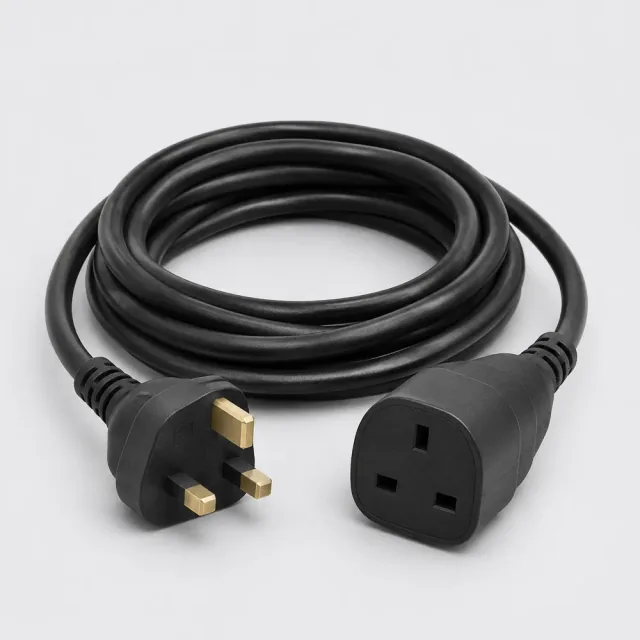
Copper conductors feed a replaceable lamp through insulated wiring and a suitable holder. An LED bulb may include a polycarbonate diffuser and silicon-based control electronics, alongside other semiconductor and thermal materials. Silicon in the electronics should not be mistaken for the complete composition of the light-emitting chip.
Why these materials?
A balanced lamp makes a material contrast visible: the arm benefits from low mass, while the base benefits from high mass in a small volume. Springs provide a changing counterforce as the geometry moves. The shade then directs light without becoming so heavy that it overwhelms that balance. A replacement bulb must meet the lamp's electrical and physical requirements; on some balanced designs even bulb weight affects positioning. Serviceability is therefore both mechanical and electrical, with replaceable light sources offering a different maintenance path from sealed lighting modules.
One object, many versions.
Gooseneck lamps use a flexible support instead of articulated arms, while clamp-mounted lamps transfer overturning forces into the desk. Integrated LED heads can be thinner because they do not contain a conventional bulb, but their repair options depend on the manufacturer. Shade material, cable coverings and joint components vary across these constructions.
What happens after use?
Replace the lamp only with a compatible type and rating specified for the fitting. Loose joints or failed springs may have approved replacement parts, whereas damaged wiring requires qualified attention. If the whole fitting reaches retirement, use an electrical collection route; separate lamps or bulbs may have their own local recovery requirements and should not be treated as ordinary glass bottles.
Familiar things, connected.

Follow the evidence
Original explanations informed by the sources below. Technical and industry sources support material behaviour; industry environmental marketing is not treated as a universal comparison. Read our editorial method.
- Type 75 Desk Lamp: product support specification ↗Anglepoise · 2024-01-08 · Checked 2026-11-14
- Type 75 Paul Smith editions: technical sheet ↗Anglepoise · 2022 · Checked 2026-11-14
- Aluminum Production and Processing ↗The Aluminum Association · Undated · Checked 2026-11-13
- Mineral Commodity Summaries 2026 — Aluminum ↗U.S. Geological Survey, National Minerals Information Center · 2026-05-27 (version 1.3) · Checked 2026-11-13
- What is steel? ↗World Steel Association · Undated · Checked 2026-11-13
- Raw materials ↗World Steel Association · Undated · Checked 2026-11-13
- Sand casting ↗The Open University · 2017 · Checked 2026-11-13
- Mineral Commodity Summaries 2026 — Copper ↗U.S. Geological Survey, National Minerals Information Center · 2026-05-27 (version 1.3) · Checked 2026-11-13
- Copper Life Cycle ↗International Copper Association · Undated · Checked 2026-11-13
- Polycarbonate (PC) ↗British Plastics Federation · Undated · Checked 2026-11-13
- Plastics Processes ↗British Plastics Federation · Undated · Checked 2026-11-13
- Silicon — element information, properties and uses ↗Royal Society of Chemistry · Undated · Checked 2026-11-13
- Mineral Commodity Summaries 2026 — Silicon ↗U.S. Geological Survey, National Minerals Information Center · 2026-05-27 (version 1.3) · Checked 2026-11-13
- Solar Photovoltaic Manufacturing Basics ↗U.S. Department of Energy · Undated · Checked 2026-11-13
- How Do I Recycle Common Recyclables ↗U.S. Environmental Protection Agency · Undated · Checked 2026-11-13