Stoneware
Stoneware is a class of fired ceramic, not stone cut from a quarry. A formulated clay body is heated until particles bond and a glassy phase helps create a dense, durable structure. Its colour and texture can range widely, and a glaze provides a separate surface. Stoneware is usually opaque and differs from both relatively porous earthenware and more highly vitrified porcelain, although commercial terminology and individual bodies can overlap.
Useful properties
Why it earns its placeA hard fired surface ↗
Firing creates a surface that resists everyday indentation and wear, while edges and flaws remain vulnerable to chipping.
Reduced but variable porosity ↗
A mature body absorbs less water than many earthenwares; the actual absorption depends on formulation and firing.
Firing is not a service rating ↗
A high kiln temperature does not establish resistance to sudden heating, oven use or a direct flame.
From input to useful material.
A simplified industrial pathway. Select a stage to learn what changes. Recycled feedstock and other process variants can enter at different stages.
Origins & processing
Manufacturers blend clays with ingredients such as feldspathic materials, quartz and sometimes previously fired particles to obtain workable and predictable behaviour. Water content is adjusted for throwing, pressing, casting or another forming route. Controlled drying limits cracks before firing. Some processes include an initial biscuit firing, followed by glaze application and a final firing; others use a single firing. The heat schedule develops the body and glaze together. Inspection checks the resulting shape and surface, not merely whether the kiln reached a particular temperature.
Where it turns up
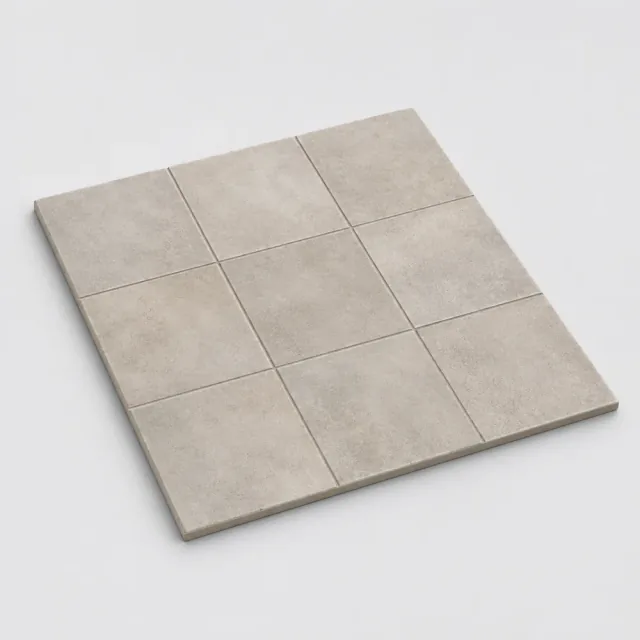
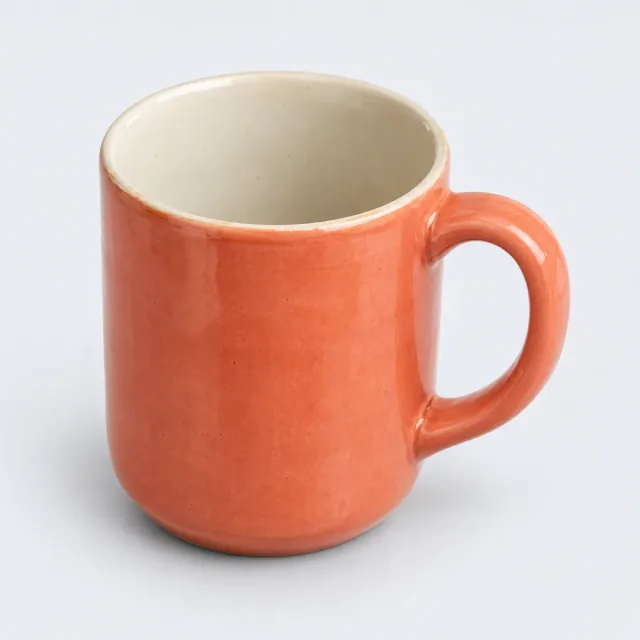
Stoneware is used in mugs, bowls, tableware and some ceramic tiles. A glazed mug combines the properties of its fired body, glaze and shape. Floor tile terminology varies, and many tiles described as porcelain belong to a different specification. A ceramic label therefore needs more detail before inferring water absorption, wear performance or suitability for a particular installation.
Useful, with limits.
Stoneware is brittle despite its hardness, and an impact can initiate cracks or chips. Sudden temperature differences can also create damaging stresses. Glaze fit and formulation affect crazing, durability and suitability for food contact. Neither a handmade appearance nor a dense body establishes microwave, dishwasher or oven suitability; those claims need evidence for the finished object and its decorations.
A next life depends on the system.
A sound stoneware item can remain useful for many years, and keeping it in service avoids the energy of replacement. Fired ceramic does not return to plastic clay by soaking. Broken material may enter approved aggregate or other specialist ceramic recovery routes, but it should not be placed in container-glass recycling, where its different melting behaviour can disrupt glass production. Local acceptance determines the practical option.
Familiar things, connected.
Follow the evidence
Original explanations informed by the sources below. Technical and industry sources support material behaviour; industry environmental marketing is not treated as a universal comparison. Browse the source register.
- Stoneware ↗Digitalfire, ceramic materials technical reference · Undated · Checked 2026-11-13
- Islamic Ceramics: Glossary N–Z ↗Ashmolean Museum, University of Oxford · Undated · Checked 2026-11-13
- Sustainable Management of Construction and Demolition Materials ↗U.S. Environmental Protection Agency · Undated · Checked 2026-11-13