PTFE
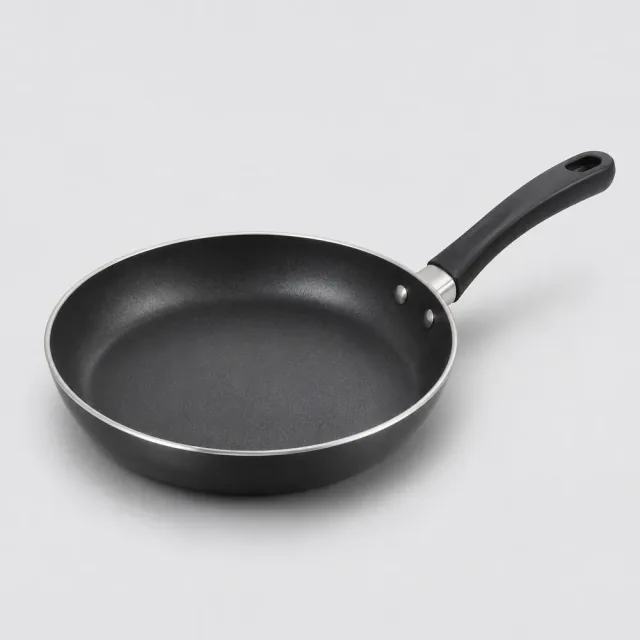
PTFE is a fluoropolymer known for low surface adhesion, low friction and resistance to many chemicals. In cookware, a thin coating helps food release from a metal body that supplies the structure and heat spreading. PTFE also serves seals, bearings and electrical insulation. A non-stick pan is therefore a layered object, and not all non-stick surfaces use PTFE. The coating chemistry and the metal beneath answer different design needs.
Useful properties
Why it earns its placeFrom input to useful material.
A simplified industrial pathway. Select a stage to learn what changes. Recycled feedstock and other process variants can enter at different stages.
Origins & processing
PTFE is produced from tetrafluoroethylene through controlled industrial polymerization. Its processing differs from that of easy-flowing thermoplastics: powders, dispersions and sintering routes are important. Cookware coatings are applied to prepared metal surfaces and cured as part of a specified coating system. Fillers or additional layers can change wear and adhesion behaviour. Fluoropolymer manufacture and waste treatment also require careful environmental management. A finished coating should not be confused with the reactive chemicals used earlier in its supply chain.
Where it turns up
A PTFE-coated frying pan exploits easy release, while a seal or electrical component may exploit chemical resistance or insulation. A pan can use aluminium, steel or layered metal beneath the coating. The material’s role is a surface function, so a tiny mass can strongly change how the whole object is used.
Useful, with limits.
PTFE coatings can wear and should not be overheated. The German Federal Institute for Risk Assessment warns that strongly overheating empty coated cookware can generate hazardous gases; follow the product’s use instructions. PTFE also belongs to the broad PFAS group, but that group contains substances with different behaviours. Generic labels should not replace a specific exposure or product assessment.
A next life depends on the system.
A thin coating is not normally recovered separately from a household pan. A metal recycler may accept the complete item under local rules, with processing needed for coatings. Specialized industrial PTFE recovery is not equivalent to a local household service. Extending a suitable product’s life and choosing repairable designs avoids assuming an easy coating-to-coating loop.
Familiar things, connected.
Follow the evidence
Original explanations informed by the sources below. Technical and industry sources support material behaviour; industry environmental marketing is not treated as a universal comparison. Browse the source register.
- Fluoroplastics PTFE FEP ↗British Plastics Federation · Undated · Checked 2026-11-13
- No adverse health effects to be expected from cookware with PTFE non-stick coating ↗German Federal Institute for Risk Assessment (BfR) · 2025 · Checked 2026-11-13