Hair dryer
Resistance heats the air; the fan keeps that heat moving.
A conventional hair dryer passes fan-driven air over a resistance element and directs the warm flow through a nozzle. Its heater needs to tolerate repeated high temperatures, while the housing and handle must remain suitable for gripping. The representative construction here uses a nickel–chromium heater, mica supports and a moulded polymer case. Modern motor layouts and ceramic-heater variants change the details without removing the need for controlled airflow.
Start with a part, then follow a material. No specialist knowledge needed.
Inside the object
Original conceptual illustration. Numbers open the component index; their positions are illustrative, not a disassembly guide. Equivalent text follows beside the diagram.
1Heating coil
Nickel–chromium resistance alloys can retain useful strength and resist oxidation while operating hot. A coil provides a long electrical path in a compact space, exposed to moving air. Iron–chromium–aluminium alloys are another established heater family and must not be called nichrome simply because they perform the same job.
2Heater supports and insulation
Mica supports can hold the coil away from adjacent conductive parts while allowing air to pass. The layered mineral tolerates heat and provides electrical insulation. Other insulating constructions exist, but mica is not interchangeable terminology for a ceramic coating, silicone seal or glass-fibre housing.
Composition explained here; no separate material entry in this edition.
3Motor and fan
Copper windings help produce rotation, while a shaped fan moves air through the heater region. A motor also contains magnetic parts, bearings and a shaft; their exact grades and the impeller polymer depend on the design. Airflow and thermal protection must be coordinated with the heating element's output.
4Case, nozzle and controls
Moulded polymers provide a light enclosure, shaped grip and air-directing nozzle. Regions nearer the outlet may need different heat-resistant formulations from cooler parts of the handle. The chosen grade, wall thickness and distance from the heater matter; the housing resin is not identified from a glossy surface.
Composition explained here; no separate material entry in this edition.
5Power lead and protective devices
A flexible copper supply lead carries current under insulating layers, with strain relief where it enters the handle. Its insulation compound must suit the intended electrical and thermal conditions. Thermal cut-outs and market-specific electrical protection are separate components that cannot be replaced by thicker plastic alone.
Why these materials?
The heater and the fan are a coupled system. Resistance converts electrical energy into heat, but airflow carries that heat away from the coil and toward the hair. Obstructed air paths can therefore change internal temperatures even if the switch settings stay the same. A heat-resistant element does not make the surrounding appliance indifferent to overheating. The handle uses a different strategy: insulation, spacing and low mass make it practical to hold. Claims such as ceramic or ionic describe particular features and do not reveal the composition of every assembly.
One object, many versions.
Some dryers place a compact brushless motor in the handle, use different heater alloys or incorporate ceramic heating elements. Diffusers and concentrators alter the air pattern, not simply the temperature. Ion-generating features add another electrical subsystem. Follow each product's care and operating guidance rather than assuming that all dryers with similar wattage have the same internals.
What happens after use?
Keep user-accessible intake screens clear according to the manual, and stop using a dryer with damage to its cord, plug or housing. Internal heater, motor and protective-device work belongs with qualified service. An unusable dryer is mixed electrical equipment; route it through the appropriate local collection programme rather than attempting to salvage the hot-wire assembly.
Familiar things, connected.
Toaster
A hot filament inside a deliberately cooler frame.
Electric fan
Light blades move the air; a stable frame keeps the motion in place.
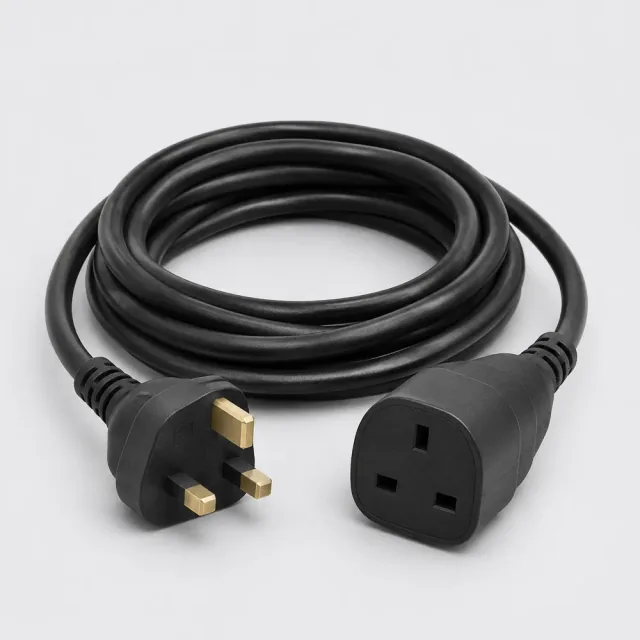
Electric cable
A conductor is useful only when its current stays on the intended path.
Follow the evidence
Original explanations informed by the sources below. Technical and industry sources support material behaviour; industry environmental marketing is not treated as a universal comparison. Read our editorial method.
- Austenitic nickel–chromium resistance-heating alloys ↗Kanthal · Undated · Checked 2026-11-14
- Elements for electric appliances ↗Kanthal · Undated · Checked 2026-11-14
- Kanthal AF wire: material datasheet ↗Kanthal · 2024-09-05 · Checked 2026-11-14
- Nikrothal 80 resistance-heating wire datasheet ↗Kanthal · 2024-09-05 · Checked 2026-11-14
- Elements for electric appliances ↗Kanthal · Undated · Checked 2026-11-14
- Austenitic nickel–chromium resistance alloys ↗Kanthal · Undated · Checked 2026-11-14
- Mineral Commodity Summaries 2026 — Copper ↗U.S. Geological Survey, National Minerals Information Center · 2026-05-27 (version 1.3) · Checked 2026-11-13
- Copper Life Cycle ↗International Copper Association · Undated · Checked 2026-11-13