Epoxy resin
Epoxy resins are widely used as adhesives, coatings and matrices for fibre composites. A reactive resin and curing system form a crosslinked network, so a cured epoxy usually does not remelt like PET or polypropylene. Its ability to bond to suitable prepared surfaces makes a small amount structurally important. In a glass-fibre circuit board or carbon bicycle component, epoxy helps turn individual reinforcements into a working material system.
Useful properties
Why it earns its placeFrom input to useful material.
A simplified industrial pathway. Select a stage to learn what changes. Recycled feedstock and other process variants can enter at different stages.
Origins & processing
Epoxy production begins with reactive resin ingredients that are formulated with a curing agent and, depending on the application, fillers and modifiers. Mixing and controlled curing create the final network. Composites may use liquid impregnation or pre-impregnated reinforcement, while coatings and adhesives use other application methods. Cure conditions affect the resulting properties. The uncured ingredients and the cured material have different handling requirements, so an educational account of the chemistry is not a recipe for safe home fabrication.
Where it turns up
A phone’s glass–epoxy circuit board, a carbon bicycle component and some protective coatings can use epoxy chemistry. These applications need different viscosities, cure behaviour and toughness. Epoxy is not the same as the glass or carbon reinforcement, and not every adhesive, coating or composite uses an epoxy system.
Useful, with limits.
Cured epoxies can be brittle without suitable formulation, and heat performance depends on the network and cure. Moisture, ultraviolet exposure or poor surface preparation can compromise a particular application. Uncured resins and hardeners require controlled handling. A strong permanent bond can improve service life while making disassembly and material separation more difficult later.
A next life depends on the system.
Conventional cured epoxy does not simply melt back into reusable resin. Specialist composite-recovery processes can treat selected streams, but recovering fibres may not preserve the matrix. Small bonded assemblies often enter mixed-product recovery routes. Designing repair access and separable joints where appropriate can preserve more value than assuming an effortless recycling loop after curing.
Familiar things, connected.

Mobile phone
A small meeting place for very different materials.
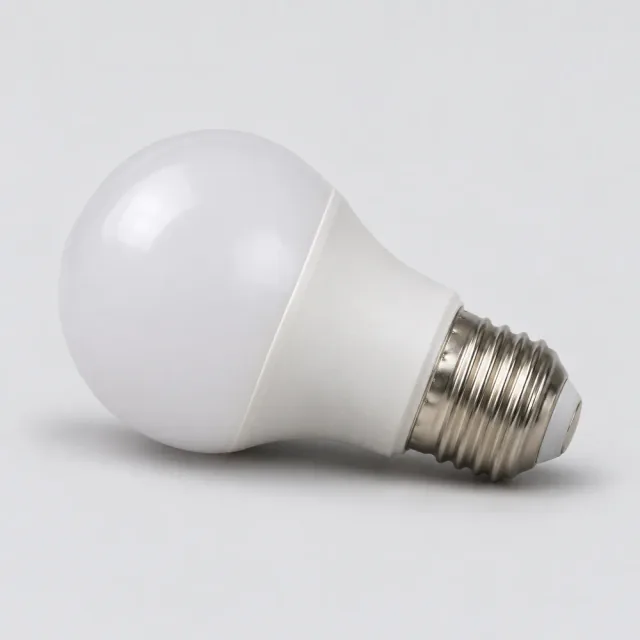
LED lamp
Making light still leaves heat to manage.
Laptop
A portable computer is also a compact heat-management system.
Keyboard
A repeated press becomes a reliable electrical decision.
Follow the evidence
Original explanations informed by the sources below. Technical and industry sources support material behaviour; industry environmental marketing is not treated as a universal comparison. Browse the source register.
- Epoxies EP ↗British Plastics Federation · Undated · Checked 2026-11-13
- Composite materials: Materials ↗Composites UK · Undated · Checked 2026-11-13
- End of Life and Recycling ↗Composites UK · Undated · Checked 2026-11-13